
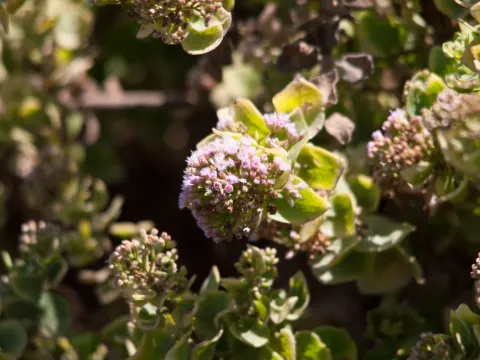
Pluchea chingoyo
Pluchea chingoyo
Pluchea chingoyo is a perennial subshrub belonging to the Asteraceae family, native to the coastal regions of Peru. The crop is primarily propagated either through seeds or by vegetative cuttings, which allow for better preservation of desired plant traits in a commercial setting.
What the section contains
Pluchea chingoyo
The optimal sowing time begins in early spring, once the soil temperature is consistently above 18 degrees Celsius. Careful seed bed preparation is essential, as the fine seeds require shallow planting depths to ensure successful germination and emergence.
For commercial cultivation, transplanting seedlings from a controlled environment to the field is the preferred method. This practice improves the survival rate and provides a significant head start during the critical early stages of the growing season.
Spacing between plants should be carefully managed to account for the species' spreading habit. Standard planting schemes often recommend rows spaced 60 to 80 centimeters apart to promote adequate airflow and light penetration for each individual plant.
Initial irrigation should be light and frequent to maintain moist soil conditions without drowning the developing roots. Once established, the frequency of watering can be reduced to encourage deeper root development and increased drought resilience.
The crop thrives in well-drained, sandy-loam soils that offer excellent drainage. Waterlogging is a significant stress factor for Pluchea chingoyo, therefore field selection must prioritize sites with natural drainage or those that allow for soil modification.
A unique agricultural advantage of this species is its high tolerance for saline conditions. It can perform well in areas where other crops might fail due to salt accumulation, making it an excellent candidate for cultivation in coastal regions.
Pluchea chingoyo is a light-demanding crop that requires full sun exposure to reach its full productive potential. Shaded areas significantly inhibit the synthesis of beneficial phytochemicals and reduce overall biomass accumulation throughout the season.
Regarding temperature, the plant prefers warm conditions and is highly sensitive to frost. In regions with freezing winters, it is typically grown as an annual crop or protected within greenhouses to maintain year-round productivity.
Nutrient management should focus on balanced applications of nitrogen during the vegetative phase and potassium during the flowering stage. Such an approach supports robust structural growth and maximizes the concentration of active compounds in the leaves.
Fungal diseases represent the most significant threat, particularly in environments with high humidity levels. Powdery mildew is a common concern that affects the foliage, hindering the plant’s photosynthetic efficiency and overall health.
Grey mold may develop in overcrowded stands where air circulation is restricted. Preventive measures, including proper spacing and weed control, are essential to minimize the humidity build-up that encourages the growth of these pathogens.
Pests such as aphids pose a frequent challenge by feeding on tender new growth. Integrated pest management strategies, involving biological control agents like ladybugs, can be highly effective in maintaining pest populations below economic thresholds.
Spider mites can also become a problem during periods of hot, dry weather. Regular monitoring of the underside of leaves and maintaining adequate humidity levels are recommended to prevent severe infestations that can stunt plant development.
Soil-borne nematodes are another potential risk, especially in fields with inadequate crop rotation histories. Incorporating cover crops that suppress nematode populations is a recommended practice to ensure long-term soil health for future planting cycles.
The harvest period for Pluchea chingoyo is critical, as it must be synchronized with the early stages of flowering. This timeframe captures the peak levels of medicinal compounds and essential oils within the plant's aerial parts.
Harvesting involves cutting the stems at approximately 10–15 centimeters above the ground. This pruning technique not only allows for efficient collection but also stimulates the plant to generate new growth for subsequent harvests within the same year.
Post-harvest handling requires immediate action to prevent the degradation of volatile compounds. The biomass should be kept out of direct sunlight and moved quickly to a shaded area or a drying facility to preserve its chemical profile.
Drying is typically performed in convection-style dryers at temperatures strictly controlled below 40 degrees Celsius. Maintaining this threshold is vital to avoid the loss of heat-sensitive active ingredients that define the crop's market value.
Once dried, the product should be stored in air-tight, moisture-resistant containers in a cool environment. Properly stored material can retain its quality and medicinal properties for up to two years, ensuring consistent market supply.