
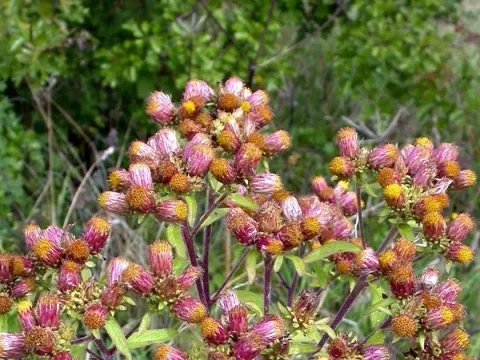
Ploughman's spikenard
Inula conyzae
Ploughman's spikenard (Inula conyzae) is a perennial herbaceous plant belonging to the Asteraceae family. It is recognized for its vertical, robust stems and glandular pubescence, which are distinct botanical characteristics of this species.
What the section contains
Ploughman's spikenard
The plant originates from the European and Western Asian regions, typically inhabiting calcareous grasslands, scrublands, and forest edges. Its adaptation to chalky and limestone soils makes it a unique candidate for specific ecological restoration projects.
In terms of agricultural requirements, this crop thrives in well-drained, alkaline to neutral soils. It exhibits significant drought tolerance once established, attributed to its deep-reaching taproot system that explores lower soil layers for moisture.
The climate suitability includes regions with moderate temperatures. It is highly winter-hardy and can withstand significant frost, provided the soil remains free of prolonged waterlogging during the dormant season.
Management practices should prioritize site selection with full sun exposure. Minimal fertilization is usually required, as excessive nitrogen often leads to weak stem development and reduces the concentration of beneficial phytochemical compounds.
Powdery mildew is the most frequent fungal issue affecting Inula conyzae, especially in plantings with high stand density or limited airflow through the canopy.
Aphids represent a primary pest threat, as they colonize the tender tips and flower buds, potentially vectoring plant viruses that stunt overall growth performance.
Soil-borne pathogens resulting from poor drainage can lead to root rot. Maintaining soil structure and avoiding compaction are essential preventative measures against these threats.
Integrated Pest Management (IPM) strategies, including the use of beneficial predatory insects, are recommended to control pest populations without disrupting the ecological balance of the field.
Field sanitation remains the most critical aspect of disease control; removing infected plant debris at the end of the season prevents the overwintering of spores and larvae.