
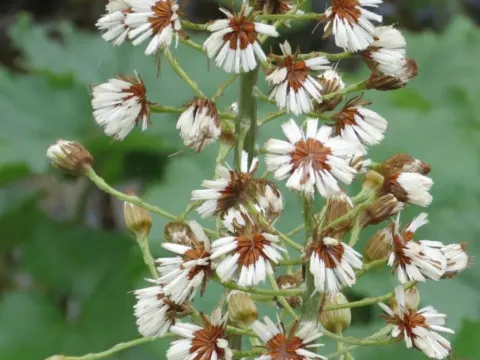
Petasites kablikianus
Petasites kablikianus
Petasites kablikianus is a perennial herbaceous plant belonging to the Asteraceae family. It is typically found in mountainous regions of Central and Eastern Europe, where it thrives in cool, humid, and shaded habitats near streams.
What the section contains
Petasites kablikianus
The plant is distinguished by its large, basal leaves and rhizomatous root system, which allows it to form dense colonies in stable environments. Its growth cycle is adapted to early spring, with flowering often preceding leaf development.
Successful cultivation requires soil rich in organic matter and high moisture levels. It is essential to avoid sites prone to prolonged drought, as the plant's large leaf area results in high transpiration rates.
Climate requirements include moderate temperature ranges and protection from direct, intense sunlight. In its natural range, it demonstrates excellent frost tolerance, making it suitable for temperate zone gardens.
Beyond its botanical interest, the crop is valued for its potential medicinal properties and its utility in permaculture for stabilizing moist slopes and pond edges.
Common phytopathological threats include various leaf spot diseases and powdery mildew. These are most prevalent when the air circulation around the canopy is restricted.
Slugs and snails are the most significant invertebrate pests, as they consume the succulent leaves, potentially causing severe defoliation during moist weather conditions.
Integrated pest management strategies should focus on maintaining adequate spacing between individual plants to promote airflow and minimize the buildup of fungal pathogens.
Biological controls are preferred, particularly the use of nematodes or natural barriers to prevent mollusks from reaching the foliage during the early spring growth phase.
Regular maintenance, including the removal of dead or dying foliage, significantly reduces the overwintering population of pests and the spread of primary fungal inoculum.