
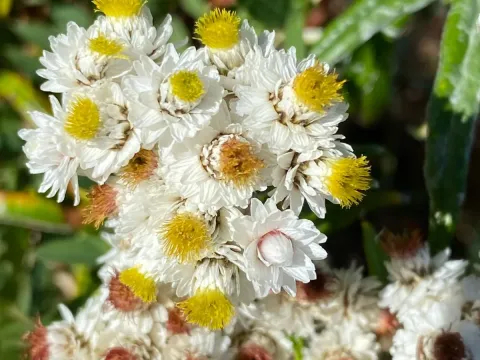
Pearly everlasting
Anaphalis margaritacea
The cultivation of Pearly Everlasting (Anaphalis margaritacea) typically begins with seed starting in late winter or early spring. Given their tiny size, seeds require careful handling and a controlled indoor environment for initial germination.
What the section contains
Pearly everlasting
Use a well-draining, sterile seed-starting mix. Surface-sow the seeds and press them lightly into the soil, maintaining high humidity and a constant temperature of about 18-20°C. Seeds generally germinate within a few weeks when provided with adequate light.
Once seedlings develop a few sets of true leaves, they should be pricked out into individual pots. This step is crucial for developing a strong root system before transitioning the young plants to their outdoor location.
Hardening off the seedlings is recommended before final transplanting. Once the danger of frost has passed in late spring, the plants can be moved to the garden bed, spacing them out to ensure proper airflow as they mature.
Division is an alternative method for propagating established clumps. This is best performed in early spring or autumn, allowing gardeners to multiply their stock while rejuvenating older, overcrowded plants.
Pearly Everlasting is a resilient perennial belonging to the Asteraceae family. It is native to temperate regions of North America and Asia, which explains its impressive hardiness and ability to thrive in cool climates.
The plant demands a full-sun location to maintain its compact, silver-leafed habit. While it can tolerate partial shade, too little light often results in leggy stems and poor flower production, which diminishes its ornamental appeal.
Soil requirements are relatively modest; the plant excels in sandy, rocky, or gravelly soils. Excellent drainage is non-negotiable, as damp soil during the winter months is a primary cause of root rot in this species.
Neutral to slightly acidic soil pH is ideal. Avoid enriching the soil with heavy compost or nitrogen-rich fertilizers, as this promotes excessive vegetative growth that weakens the stalks and reduces the plant's natural vigor.
Once established, the plant is remarkably drought-tolerant. Irrigation should be restricted to periods of extreme drought, ensuring the plant is never allowed to stand in saturated conditions, which can be detrimental to its longevity.
In a commercial or ornamental setting, yield is determined by the number of harvestable stems. A mature, well-cared-for plant can produce numerous sturdy flower stalks suitable for professional floristry and dried arrangement use.
Regular maintenance, including rejuvenation of the planting site every few years, is essential for consistent yield. Older clumps tend to lose their density, leading to smaller, less impressive flower heads that are less desirable for high-quality bouquets.
The primary economic value of Anaphalis margaritacea lies in its status as a premier dried flower. The silver-white pearly bracts retain their structural integrity for years, making them a staple in the craft and decor industries.
Peak bloom occurs from mid-summer into early autumn. Careful timing of the harvest is vital; the flowers must be collected when they have fully opened but before the centers begin to darken or lose their pristine appearance.
Optimizing plant density is key to maximizing yields per square meter. A spacing of roughly 6 to 9 plants per square meter is generally recommended to provide enough space for healthy development while achieving uniform production levels.
Pearly Everlasting is inherently robust, yet it can be prone to specific ailments if cultural conditions are ignored. The most common issues are almost always associated with poor soil drainage or high humidity.
Powdery mildew can become a problem if plants are spaced too closely or if air circulation is obstructed. Fungicidal treatment and manual thinning are the standard corrective measures to control the spread of the fungus.
Insects such as aphids and spider mites may occasionally infest the foliage, particularly during hot, dry spells. Early detection through regular monitoring allows for the use of gentle, effective biological control methods.
Slugs and snails can target young shoots in the spring. Implementing physical barriers or using organic baits is often sufficient to protect the developing plants without relying on harsh chemical pesticides.
Preventative health for this crop revolves around site selection. Ensuring a sunny spot with fast-draining soil and avoiding overhead watering during late evening hours will significantly reduce the risk of disease.
Harvesting should be done on a dry day, after the morning dew has evaporated. Flowers must be at the peak of their development to ensure they keep their characteristic pearl-like color once dried.
Collect stems and group them into small, manageable bundles. Small bundles are essential because they allow for better airflow during the drying process, preventing the interior stems from turning moldy or black.
Dry the bundles by hanging them upside down in a cool, dark, and well-ventilated room. Darkening the drying area is crucial, as exposure to intense sunlight will fade the delicate silver-white tones of the flower heads.
The resulting dried material is highly durable and versatile for home and event decor. Because it does not shed easily, it remains a favorite among florists for long-lasting, eco-friendly floral designs.
After the harvest is complete, prune the remaining stems back to the base of the plant. This final cleanup helps the plant redirect energy to the root system for winter survival and ensures a tidy look for the dormant season.