
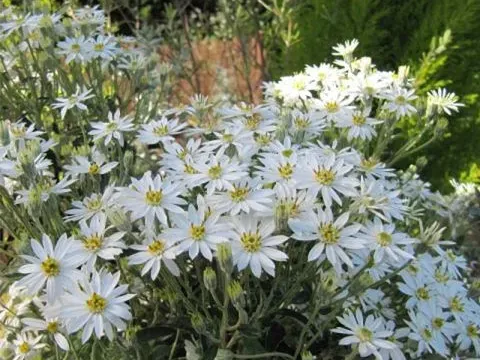
Scilly Isles Daisy
Olearia scilloniensis
Olearia scilloniensis, commonly known as the Scilly Isles Daisy, is an evergreen shrub belonging to the Asteraceae family. This hybrid species is highly valued for its striking display of white flowers and its dense, grey-green foliage, making it a popular choice for coastal garden designs.
What the section contains
Scilly Isles Daisy
Originating from the Isles of Scilly, the plant is adapted to mild maritime climates. It thrives in locations with full sun exposure and protection from harsh, drying winds. It is particularly well-suited for temperate coastal regions where winters are relatively mild.
Soil requirements for this species include excellent drainage and moderate fertility. It is sensitive to waterlogged conditions, which can lead to root rot; therefore, it is essential to plant it in well-draining soil mixed with organic matter to ensure optimal growth.
Agricultural techniques for this crop involve consistent watering during the establishment phase and drought periods, followed by careful monitoring of moisture levels. Pruning is necessary to maintain a tidy habit and to encourage a flush of new growth after the flowering season concludes.
Given its limited hardiness in severe frost, in colder climates, it should be treated as a container plant. This allows for overwintering in a greenhouse or a frost-free conservatory, protecting the sensitive root system from deep soil freezing.
The primary threat to the Scilly Isles Daisy is root rot caused by poor soil drainage and waterlogging. Ensuring that the site allows for rapid water infiltration is the most effective preventative measure against fungal soil pathogens.
Aphids and spider mites are common pests that target the tender shoots and foliage, particularly during hot and dry spells. Integrated pest management, including regular inspection and the use of insecticidal soaps, is recommended to manage infestations.
Powdery mildew can affect the leaves, especially if the plants are placed in areas with restricted airflow. Proper spacing and strategic pruning are vital for reducing humidity levels around the foliage and preventing fungal spores from germinating.
Leaf spot diseases may occur in particularly wet seasons, manifesting as dark lesions on the foliage. Applying copper-based fungicides during the early spring can act as a protective barrier against such outbreaks.
Maintaining the overall vitality of the plant through correct fertilizing and pruning practices significantly reduces susceptibility to secondary infections and pest colonization throughout the growing season.