
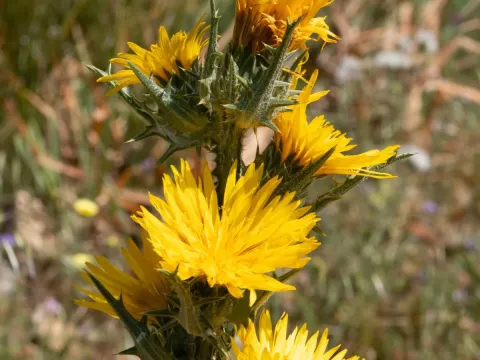
Scolymus grandiflorus
Scolymus grandiflorus
Scolymus grandiflorus is a perennial or biennial herb belonging to the Asteraceae family, valued for its edible roots and young leaves. Seeds are typically sown in early spring, once the soil temperature consistently reaches 10–12 degrees Celsius to ensure rapid germination.
What the section contains
Scolymus grandiflorus
In warmer climates, autumn sowing is also a viable practice, allowing the plants to establish before the onset of extreme summer heat. Seeds should be planted at a depth of approximately 1.5 to 2 centimeters, with sufficient spacing of 30–40 centimeters between plants.
Because the initial growth phase is relatively slow, maintaining a weed-free environment is critical for the success of the crop. Row spacing of 50–60 centimeters is recommended to allow for mechanical cultivation and adequate air circulation around the developing rosettes.
Germination usually occurs within 14 to 20 days, depending on soil moisture levels and temperature. Utilizing a light organic mulch after sowing can help preserve soil moisture and reduce the pressure from emerging weed seeds.
For early season production, seeds can be started in seedling trays indoors about four to five weeks before the last expected frost. This technique helps shorten the field establishment phase and improves the overall uniformity of the crop.
This plant thrives in full sun and prefers well-drained, sandy or loamy soils. It is notably drought-tolerant once established, thanks to its deep taproot system, which allows it to thrive in conditions where other leafy vegetables might wilt.
Scolymus grandiflorus performs best in soils with a neutral to slightly alkaline pH. While it is adaptable to various soil types, the primary requirement is the prevention of waterlogging, which can easily damage the fleshy root system.
In terms of fertilization, the plant benefits from moderate levels of potassium and phosphorus to support healthy root development. Excessive nitrogen should be avoided, as it encourages excessive vegetative growth at the expense of root quality and density.
The optimal temperature range for development is between 18 and 25 degrees Celsius. While it can withstand occasional frost, extreme fluctuations during the active growing season may temporarily slow down its physiological development.
Standard agronomic practices include regular hoeing to prevent the formation of soil crusts and to keep the root zone aerated. Proper water management, focusing on irrigation only during prolonged dry spells, is sufficient to maintain high productivity.
Scolymus grandiflorus is generally resistant to many common pests due to its robust nature and chemical properties. However, during periods of high heat and moisture stress, aphid populations may colonize the leaves, requiring careful monitoring.
Fungal diseases, such as powdery mildew or root rots, are the most significant threats, particularly in areas with poor drainage or high humidity. Ensuring wide spacing between rows is a primary cultural control method to minimize disease outbreaks.
Soil-dwelling insects, such as wireworms, can cause physical damage to the roots, which may then serve as entry points for bacterial or fungal infections. Rotation with non-host crops is essential to keep pest populations at low levels.
Phytosanitary measures, including the removal of crop debris after harvest, are crucial for long-term health in the garden or field. Stagnant water around the plant collar is a major precursor to root rot and must be prevented at all costs.
When chemical control becomes necessary, the use of targeted biorational pesticides is encouraged to maintain the ecological balance of the farming plot. Always consult local regulations before applying any treatments to edible root crops.
The harvest strategy for Scolymus grandiflorus involves collecting both aerial parts and roots. Young leaves are harvested throughout the growing season by trimming the outer portions of the rosette without damaging the central growing point.
Root harvest typically takes place in late autumn of the first year or early spring of the following year. At this stage, the roots are at their peak in terms of texture and flavor, having stored significant reserves for the coming growth cycle.
Careful digging with a garden fork is necessary to avoid scarring or snapping the brittle roots, which can lead to rapid post-harvest deterioration. Any damaged roots should be set aside for immediate culinary use.
After harvest, roots should be washed gently and stored in a cool, humid environment. In professional storage, temperatures near 0–2 degrees Celsius are ideal to extend the shelf life of the roots for several weeks.
The culinary profile of the roots is often described as nutty or similar to that of parsnips and globe artichokes. They are highly versatile and can be prepared by boiling, roasting, or sautéing, making them a gourmet addition to diverse menus.