
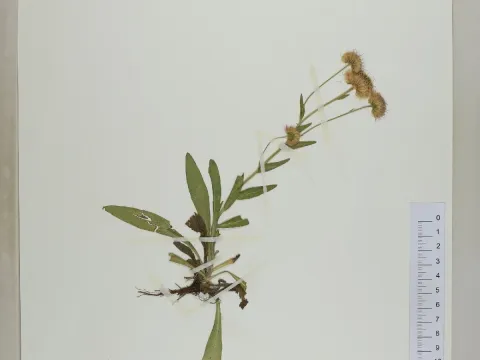
Schleichers Fleabane
Erigeron schleicheri
Schleicher's Fleabane (Erigeron schleicheri) is a herbaceous perennial belonging to the Asteraceae family. As a native species of European alpine zones, this plant is adapted to rocky slopes and high-altitude meadows, reflecting its unique biological traits.
What the section contains
Schleichers Fleabane
The plant has specific environmental demands, primarily requiring high light intensity. It is poorly suited for shaded environments, where its growth habit becomes elongated and less resilient to environmental stressors.
Soil requirements are strict, focusing on excellent drainage. A gritty, sandy, or rocky substrate with a neutral to slightly acidic pH is ideal. Heavy, water-retaining soils must be avoided as they significantly increase the risk of root system decline.
Regarding climate, the plant thrives in cooler temperatures and demonstrates high frost resistance. However, it requires protection from unpredictable winter thaws, as fluctuating soil moisture can cause physical damage to the root crown.
In terms of agricultural and horticultural use, it is prized as a decorative element in rock gardens and alpine-style landscaping. Its compact growth form and early seasonal blooming make it a specialty crop for ornamental growers.
Seeds of Erigeron schleicheri require cold stratification to break dormancy. Sowing should occur in late winter to early spring, using a well-drained, sterile sowing medium placed in a cool, bright location.
Seeds are sown on the surface and should not be covered with a thick layer of substrate, as light is a critical trigger for germination. Constant, moderate moisture levels must be maintained during the initial stages of plant development.
Transplanting seedlings requires precision to ensure the delicate root system remains intact. Seedlings should be grown in individual pots until they reach a sufficient size to withstand outdoor environmental conditions.
Planting out into the permanent site occurs once soil temperatures have warmed and the risk of severe night frosts has passed. Spacing depends on the desired coverage, usually ranging between 20 to 30 centimeters between individual plants.
For vegetative propagation, division of the root mass is performed during the dormant season. This technique requires careful handling to ensure each segment has sufficient root biomass to thrive independently.
The primary threats to the health of Schleicher's Fleabane are fungal pathogens, specifically those that thrive in high humidity. Powdery mildew can quickly affect foliage if air circulation is inadequate.
Root rot is the most serious threat caused by poor drainage or overwatering. Maintaining a strict irrigation schedule is essential, especially during the wetter months of the year, to prevent soil saturation.
Pests, particularly aphids and spider mites, can cause significant damage to the floral parts and leaves. These pests are most problematic during hot, dry spells, necessitating regular inspection of the plants.
Early detection and the application of integrated pest management practices are recommended to maintain the plant's aesthetic and physiological integrity throughout the growing season.
- Ensure spacing between plants is adequate to improve airflow.
- Apply a gravel mulch around the base to keep the crown dry.
- Remove infected or dead tissues immediately to prevent further spread.