
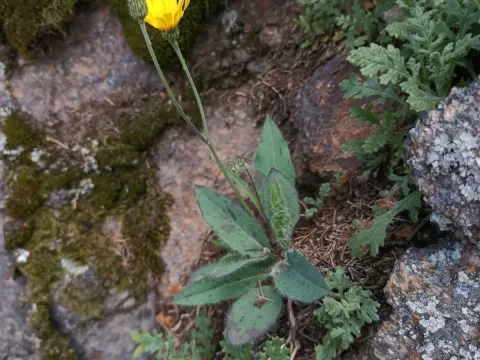
Schmidt's hawkweed
Hieracium schmidtii
Schmidt's hawkweed, scientifically known as Hieracium schmidtii, is a perennial herbaceous plant belonging to the Asteraceae family. It is native to the rocky and mountainous regions of Southern and Central Europe.
What the section contains
Schmidt's hawkweed
This species thrives in well-drained, sandy, or rocky soils. It is highly valued for its ability to grow in poor-nutrient substrates where most other plants would struggle to establish themselves.
In terms of climate, it requires full sun exposure to maintain its compact, rosette-forming habit. It is exceptionally drought-tolerant once established, making it a perfect candidate for xeriscaping.
Botanically, it is distinguished by its silvery, pubescent foliage that minimizes water loss. The plant produces yellow, daisy-like flower heads on slender stalks during the peak of summer.
Agronomically, it requires minimal maintenance. It does not need frequent fertilization, as excessive nutrients can result in lanky growth and reduced resilience against environmental stressors.
The primary threats to this plant are root-related issues caused by waterlogging. Excellent drainage is critical to prevent the development of crown and root rots during wet seasons.
Common pests include aphids and spider mites, which can infest the underside of the leaves. Regular inspection of the plant is recommended to detect these pests before they cause significant damage.
Powdery mildew is a common fungal threat when air circulation is poor or humidity levels are too high. Planting in open spaces with sufficient airflow is the best preventative measure.
Weed competition is a significant challenge, especially for young plants. Mulching with fine gravel can help suppress weeds while providing the natural aesthetic look preferred for this species.
If chemical interventions are necessary, always select products specifically labeled for alpine or rock garden plants to avoid phytotoxicity on sensitive foliage.