
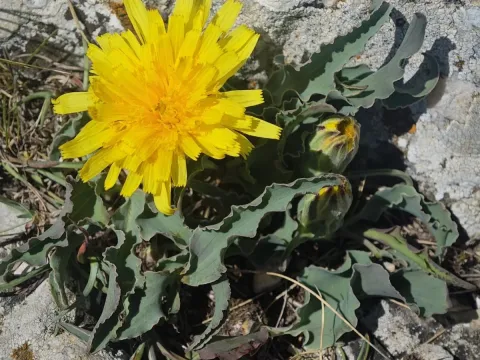
Scorzonera
Scorzonera
Scorzonera, commonly known as black salsify, is a perennial vegetable often cultivated as an annual or biennial crop. The optimal time for sowing seeds in open ground is early spring, as soon as the soil warms up to at least 8–10 degrees Celsius.
What the section contains

Scorzonera
Late autumn sowing is also possible, which allows for earlier harvests in the following spring season. Seeds should be sown at a depth of 2–3 centimeters in light, nutrient-rich soil, maintaining a row spacing of approximately 30 centimeters.
The germination process is relatively slow, so it is essential to keep the soil consistently moist during the emergence period. Thinning should be performed when the first true leaves appear, leaving a distance of 10–15 centimeters between plants.
The crop is highly cold-hardy, meaning that young seedlings can withstand brief spring frosts without any significant damage to their long-term growth and root development.
For more uniform germination, it is recommended to soak the seeds beforehand, as the seed coat is quite firm and requires a sufficient amount of moisture to soften properly before planting.
Scorzonera belongs to the Asteraceae family and has specific requirements for soil structure. To produce high-quality, straight roots, deep, loose loamy or sandy soils with a neutral pH are essential for cultivation.
In heavy clay soils, the roots tend to become deformed, branched, and coarse, which significantly lowers their market value. The crop is light-loving, so the planting site should be fully exposed to the sun and protected from strong winds.
Applying fresh manure directly to the crop is not recommended, as it encourages excessive root branching. The best predecessors for scorzonera are cucumbers, potatoes, tomatoes, or onions, which have been previously treated with organic fertilizers.
Although the plant is quite drought-resistant, regular watering during the active growth phase, especially in mid-summer, is crucial for producing juicy and large root vegetables.
Particular attention should be paid to weed control: scorzonera is sensitive to competition during its early growth stages, so regular weeding and soil loosening between rows are essential tasks for successful cultivation.
The yield of scorzonera directly depends on soil fertility and the quality of agronomic practices. When all cultivation guidelines are followed, one can harvest up to 3–4 kilograms of high-quality roots per square meter.
The period from sowing to technical maturity ranges from 100 to 120 days, depending on the chosen variety and local climatic conditions. The roots feature a dark, nearly black skin and a white, very tender flesh with a pleasant, sweet flavor.
The plant responds well to balanced mineral fertilizers containing potassium and phosphorus, which contribute to better maturation and higher sugar accumulation in the roots.
The indication that the crop is ready for harvest is the yellowing and wilting of the lower part of the leaf rosette, which usually occurs late in autumn, as scorzonera prefers cooler weather to complete its growth cycle.
Varieties with higher yield potential require careful spatial isolation during the seed-saving process to prevent cross-pollination with wild types and to maintain the purity of the specific cultivar.
Scorzonera is relatively resistant to diseases; however, in unfavorable wet years, it may be affected by powdery mildew, which manifests as a white powdery coating on the plant leaves.
Among pests, wireworms are the most significant threat as they damage the roots, while aphids can infest young leaves, sucking out plant juices and slowing down the overall development of the crop.
In cases of excessive soil moisture and poor aeration, root rot may occur, making the roots unsuitable for long-term winter storage in cellars or cool rooms.
To control pests, the use of environmentally friendly insecticides is advised, along with strict adherence to crop rotation, ensuring the plant is not grown in the same area more often than every 3–4 years.
Disease prevention involves the timely removal of plant residues from the field and maintaining optimal irrigation regimes, which helps prevent the creation of environments conducive to pathogenic fungi.
Harvesting scorzonera takes place in autumn, ideally before the ground freezes solid. The roots are very long and fragile, so they must be extracted from the soil with extreme care using a garden fork.
Mechanical damage to the skin during harvesting is unacceptable, as it leads to the loss of milky sap and rapid wilting, making the product more susceptible to decay during the storage process.
Some of the crop can be left in the ground to overwinter, provided the local climate does not feature critically low temperatures. This method often results in sweeter roots and preserves their flavor profile.
After harvesting, the foliage is trimmed level with the crown of the root, and the roots are dried under a canopy. For long-term storage, they are layered in damp sand and kept in a cool cellar at temperatures between 0 and 2 degrees Celsius.
In addition to the roots, the young leaves of scorzonera can be consumed and are often harvested in the early spring to be used in healthy salads and vegetable side dishes.