
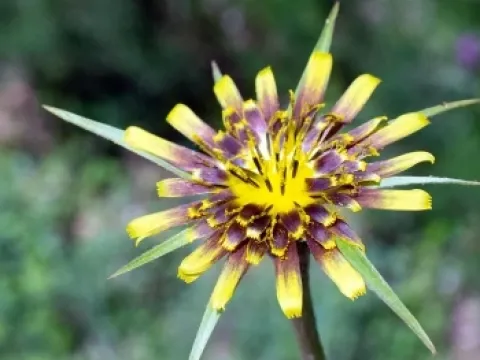
Scorzonera (or Spanish salsify)
Tragopogon castellanus
Sowing of Tragopogon castellanus should be planned for early spring once the soil temperature consistently reaches 5–8 degrees Celsius.
What the section contains
Scorzonera (or Spanish salsify)
For regions with milder winters, autumn sowing is possible, which often leads to earlier germination and better root development during the next growing season.
Seeds are sown in rows spaced 30–45 centimeters apart, which provides sufficient room for the plant to develop its taproot effectively.
The optimal planting depth is 2–3 centimeters, and firming the soil after sowing ensures the necessary contact for quick and uniform germination.
Thinning out seedlings in the two-leaf stage is essential to maintain a distance of 10–15 centimeters between plants, preventing overcrowding.
Tragopogon castellanus belongs to the Asteraceae family and is well-adapted to temperate climates, preferring open, sunny locations for best growth.
This crop thrives in deep, loose, well-drained loamy or sandy soils, which are ideal for the formation of long, straight, and smooth roots.
The plant is known for its remarkable drought tolerance once established, thanks to its deep taproot system, which helps it access water during dry periods.
Soil pH should ideally be neutral or slightly alkaline, and excessive nitrogen fertilization should be avoided as it can cause lateral root branching.
Proper aeration is vital for root health, so deep cultivation before sowing is highly recommended to eliminate soil compaction.
The yield of Tragopogon castellanus is highly dependent on consistent moisture during the early growth phase and deep, fertile soil conditions.
Under favorable conditions and proper management, the crop can yield between 15 to 25 tons of high-quality roots per hectare.
The roots are highly valued in specialty culinary markets for their nutty flavor and high inulin content, which provides health benefits.
Regular weeding and inter-row cultivation help suppress competitors and ensure that the plants receive adequate sunlight and nutrients for maximum yield.
Harvest quality is improved by regular monitoring and ensuring that the roots are not subjected to mechanical injury during the growth cycle.
Powdery mildew is a common threat in humid conditions, which can be managed by ensuring proper plant spacing and good air circulation.
Soil-borne pests like wireworms can damage the taproots, rendering them unattractive and susceptible to secondary fungal infections.
Aphids can occasionally colonize the foliage, and while they rarely destroy the plant, they can reduce the photosynthetic rate and overall vigor.
Crop rotation is the most effective preventative measure to break the life cycles of pests and soil-borne diseases in the vegetable garden.
Proper sanitation, including the removal of crop residues at the end of the season, reduces the risk of pest populations establishing in the area.
Harvesting usually occurs in late autumn, approximately 120–150 days after sowing, as the foliage begins to yellow and wither naturally.
Roots should be lifted carefully using a garden fork to avoid snapping, as intact roots store significantly longer than damaged ones.
After harvesting, the roots are cleaned of soil and can be stored in cool, dark environments covered in sand to maintain moisture and freshness.
Optimal storage conditions involve temperatures near 0–2 degrees Celsius and high humidity to prevent the roots from shriveling during winter.
Because the roots are hardy, they can be left in the ground in many climates and harvested throughout the winter as needed for fresh consumption.