
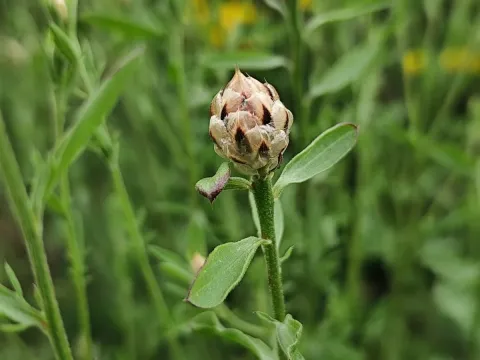
Scorched knapweed
Centaurea deusta
Scorched knapweed (Centaurea deusta) belongs to the Asteraceae family. This perennial herbaceous plant is native to the mountain regions of Southern and Central Europe, where it typically thrives in dry, sunny environments and rocky slopes.
What the section contains
Scorched knapweed
Botanically, it is distinguished by its erect stems and unique flower heads, where the bracts possess dark, scorched-looking margins. This visual trait provides the species with its common and scientific names, making it a recognizable plant in the field.
The crop is highly drought-tolerant, relying on a robust root system to secure moisture from deeper soil layers. It demands full sun exposure and performs poorly in shaded areas, which can lead to elongated, weak stems and reduced flowering.
Soil requirements focus primarily on drainage. It prefers well-drained loamy or sandy soils with a neutral pH level. Excessively moist or heavy clay soils should be amended with organic matter or grit to ensure optimal root respiration.
Beyond its aesthetic value, Scorched knapweed is utilized in sustainable agriculture as a nectar source for pollinators, playing a significant role in supporting local bee populations during the peak summer months.
While generally hardy, Scorched knapweed can be susceptible to powdery mildew, especially during seasons with high humidity and stagnant air. Proper spacing is essential to ensure good ventilation and reduce infection rates.
Root rot caused by fungal pathogens is a primary concern if the soil remains waterlogged for extended periods. Implementing a strict irrigation schedule and monitoring drainage is the best preventative strategy for this issue.
Aphids are the most common insect pests encountered during the growing season. They tend to congregate on the tender flower buds, and manual removal or the application of insecticidal soaps is usually sufficient to handle minor infestations.
Leaf-feeding beetles may occasionally damage the foliage. While these insects rarely kill the plant, their feeding can reduce the plant's overall vigor and aesthetic appeal, necessitating early detection and intervention.
Integrated pest management strategies, such as maintaining a clean environment and encouraging predatory insects, remain the most effective methods for preserving the health and longevity of the Scorched knapweed crop.