
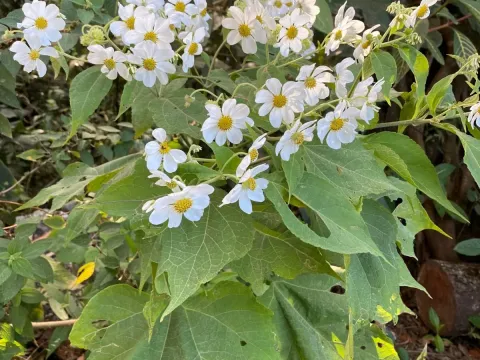
Montanoa
Montanoa
Montanoa is propagated primarily through seeds or cuttings during the spring season. Seeds are sown in prepared substrate in late winter or early spring, ensuring a stable temperature of about 20–22 degrees Celsius for successful germination.
What the section contains


Montanoa
For cuttings, semi-hardwood shoots are used and rooted in a sand-peat mixture under plastic cover. This method allows for faster development of a mature plant capable of blooming within the same season.
When planting in open ground, it is necessary to wait for the soil to warm up completely and avoid the risk of late frosts, as the culture is sensitive to low temperatures.
The optimal planting density depends on the specific species, but on average, it ranges from 1 to 2 plants per square meter to ensure sufficient air circulation through the canopy.
After planting, the seedlings should be watered abundantly and mulched to retain moisture, which promotes quick rooting and the development of a strong root system during the first month of vegetation.
Montanoa is a genus of perennial shrubs and trees belonging to the Asteraceae family, originating from regions in Central America and Mexico.
The plant prefers well-lit areas protected from strong winds, as its brittle branches can be damaged under unfavorable weather conditions.
Soils for successful cultivation must be fertile, well-drained, and have a neutral to slightly acidic pH to prevent waterlogging around the roots.
Water requirements are moderate; however, during periods of active growth and flowering, it is necessary to provide regular irrigation without oversaturating the root ball.
The culture is thermophilic, so in temperate latitudes, it is often grown as a container plant, requiring relocation to greenhouses or winter gardens when cold weather arrives.
The main threats to Montanoa include sap-sucking pests such as spider mites and aphids, which proliferate rapidly in low-humidity conditions.
Excessive watering and poor soil aeration may lead to root system infection by fungal rots, resulting in wilting and plant death.
To prevent the spread of infections, regular sanitary pruning is necessary, removing dead, damaged, or overcrowded branches from the canopy.
In case of pest infestation, broad-spectrum biological or chemical insecticides should be applied according to the manufacturer's specified dosages.
Disease prevention consists of maintaining an optimal moisture regime, ensuring sunlight penetration to the leaves, and regular inspection of the plantings for early signs of infestation.