
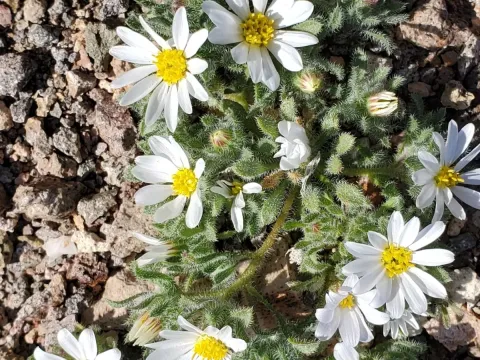
Monoptilon
Monoptilon
Monoptilon is a genus of annual herbaceous plants belonging to the Asteraceae family, typically found in arid environments.
What the section contains

Monoptilon
In its native habitat, germination is triggered by seasonal rains, allowing the plant to complete its lifecycle rapidly.
When cultivating, seeds should be sown in early spring into a well-draining, sandy substrate that mimics desert soil.
The seeds require light for optimal germination, so they should not be buried deeply when being planted.
Early maintenance involves consistent but light moisture until seedlings are established, after which irrigation is reduced.
The plant originates from the arid regions of the southwestern United States and northwestern Mexico, adapted to intense heat.
It thrives in full sunlight and requires a location with high light intensity to prevent etiolation and ensure healthy growth.
Soil composition must be primarily sandy with excellent drainage properties to prevent any moisture buildup in the root system.
Monoptilon is highly tolerant of drought and extreme thermal stress but is sensitive to prolonged cold and frost.
In terms of agricultural or decorative use, it serves as a specialized plant for arid gardens and xeriscaping projects.
The primary threat to Monoptilon is overwatering, which quickly leads to root rot and complete loss of the plant.
Poor ventilation in greenhouse environments can promote fungal diseases, particularly mildew affecting the foliage.
Pests like spider mites may occur if the plant is grown indoors or in stagnant air conditions with low humidity.
Natural pathogens in their native range are few, but imported specimens may be susceptible to opportunistic soil fungi.
Management strategy focuses on keeping the substrate dry and ensuring maximum air circulation to mitigate disease risks.