
Rock samphire
Limbarda crithmoides
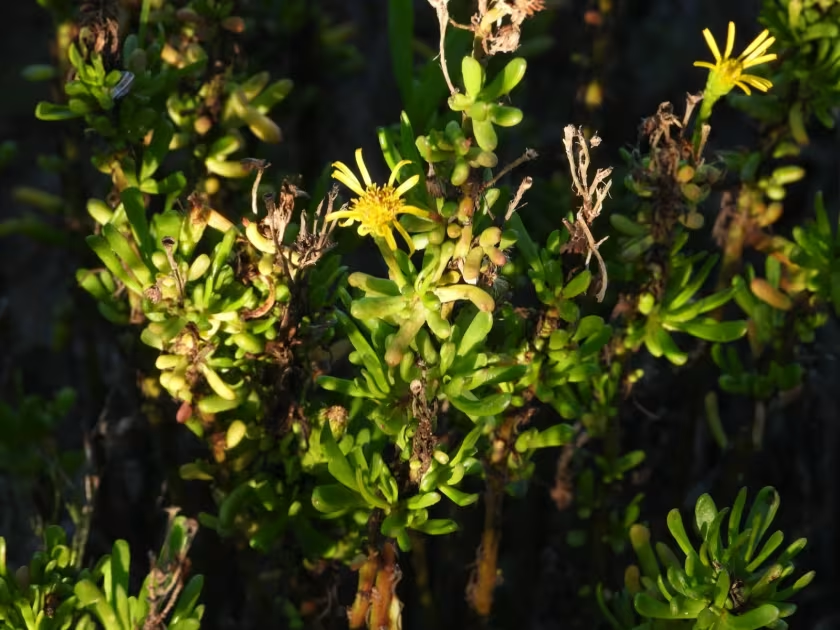
Description
Sowing dates
Rock samphire (Limbarda crithmoides), also referred to as golden samphire, belongs to the Asteraceae family. It is a robust perennial plant naturally adapted to coastal environments, capable of thriving in saline soils where many other crops struggle.
The sowing season typically begins in early spring, ideally around March. Seeds require a well-prepared seedbed, ideally in a greenhouse or cold frame to ensure consistent germination rates before transplanting outdoors.
Germination is most successful when the temperature is maintained between 15 and 20 degrees Celsius. Maintaining soil moisture during this initial stage is critical for the development of healthy seedlings.
When transplanting into the field, seedlings should be spaced approximately 40 cm apart. This density encourages proper ventilation and prevents the spread of diseases within the dense canopy.
Proper site preparation, including the incorporation of sand or gravel to enhance drainage, is essential for successful establishment of the crop in non-coastal areas.
Growing requirements
As a halophyte, Limbarda crithmoides requires specific environmental conditions. It thrives in well-drained, sandy, or saline soils that are common in its natural habitat along the coastline.
Full sun is essential for the crop. Exposure to direct sunlight directly influences the accumulation of aromatic compounds and essential oils in the leaves, which are highly valued in the culinary and medicinal industries.
Temperature tolerance is generally good, though the plant does not perform well in waterlogged soil. Proper drainage systems must be established to prevent root rot, which is a major risk for this species.
While the plant is known for being drought-tolerant once established, regular supplemental watering during the growing season significantly increases the biomass and succulent quality of the harvest.
Fertilization should be handled with care. A balanced, low-nitrogen approach is recommended to ensure strong root development without forcing excess vegetative growth that might dilute its characteristic flavor profile.
Yield
Yield capacity for rock samphire varies depending on the age of the crop and the intensity of the management. Established fields can produce several harvests per season.
Sustainable harvesting begins once the plant has fully established, typically in its second year. Selective pruning encourages the plant to produce new shoots throughout the summer months.
Yield is significantly higher when using modern irrigation techniques, such as drip systems, which allow for controlled nutrient delivery and optimal soil moisture levels in diverse climatic zones.
The culinary demand for rock samphire as a gourmet garnish or vegetable ingredient provides strong economic incentives for cultivation, particularly for the fresh-market produce sector.
To maintain high productivity, fields should be rotated or replanted every few years, as vigor may decline in older plants that have reached the end of their peak physiological cycle.
Main diseases and pests
Root rot and fungal infections represent the primary biological threats to the cultivation of Limbarda crithmoides, especially in environments where humidity levels are constantly high.
Pests such as aphids and spider mites can infest the plant, particularly in sheltered or poorly ventilated growing areas, leading to leaf damage and a reduction in market quality.
Effective pest management relies on early detection and the use of integrated pest control methods that do not compromise the safety of the harvested product for human consumption.
Proper weed management is essential during the early stages of growth to ensure that young plants have sufficient access to light and nutrients without competitive pressure.
Regular monitoring of the crop canopy and soil moisture is the best preventative strategy against disease outbreaks in commercial field conditions.
Harvesting
Harvesting is performed by manually trimming the tender young shoots. This precise method ensures that only the highest quality foliage is selected for the fresh market.
The optimal harvest time is early in the morning before the temperature rises. This ensures the leaves maintain maximum moisture content and aromatic potency during the initial post-harvest phase.
Quick cooling of the product to 4–6 degrees Celsius immediately after harvesting is a critical step to preserve the aesthetic and culinary characteristics of the greenery.
Packaging should allow for adequate airflow during transport to prevent the degradation of the delicate succulent leaves, which are highly perishable if kept in enclosed, unventilated containers.
For processing purposes, such as drying, the foliage is collected during the pre-flowering stage, when the concentration of essential oils is at its highest point of the season.