
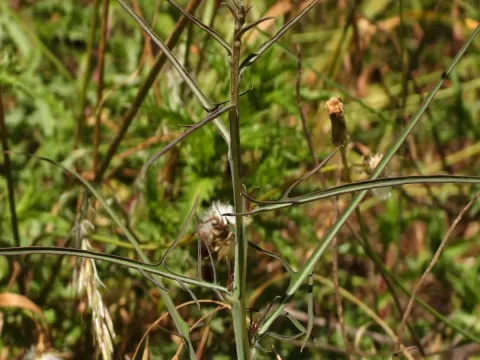
Lactuca saligna
Lactuca saligna
Lactuca saligna, commonly known as least lettuce, is typically propagated by seeds that require a well-prepared seedbed for successful germination.
What the section contains
Lactuca saligna
The sowing period is generally in early spring, allowing the plant to utilize soil moisture and cooler temperatures to establish its root system.
Seeds should be sown at a shallow depth, ensuring that they receive adequate light exposure, which is often a key factor for breaking dormancy.
Spacing during planting is crucial to prevent overcrowding, which can otherwise lead to stunted growth and increased competition for essential nutrients.
Regular monitoring of seedlings is necessary during the first few weeks to ensure that soil moisture remains consistent until the plants are fully established.
This species belongs to the Asteraceae family and is well-known for its ability to thrive in saline soils where many other plants struggle to survive.
It prefers sunny environments and does not tolerate significant shade, which tends to reduce its overall vigor and potential biomass production.
The soil structure should ideally be well-drained, although the plant has shown remarkable adaptability to various soil types including clay and silt.
Environmental conditions characterized by moderate salt content are actually beneficial for this plant, making it a unique candidate for specific ecological niches.
Thermal requirements are relatively moderate; the plant grows best in temperate climates with enough sunlight to facilitate constant photosynthesis.
Fungal infections, specifically downy mildew and powdery mildew, represent the most frequent pathological risks to healthy stands of Lactuca saligna.
Root rot can occur if the field is poorly drained or during prolonged rainy periods, leading to decay of the basal parts of the plant.
Aphids are the primary pests that infest the leaves and floral structures, causing significant damage through direct sap depletion and potential disease transmission.
Leaf miners can also be problematic, creating unsightly trails on the leaves that eventually lead to tissue necrosis and reduced vitality.
Effective management strategies should include crop rotation and the prompt removal of crop debris to break the life cycles of common pests and pathogens.
The harvest strategy depends on the intended end-use of the plant, with the optimal timing being shortly before the plant begins to bolt and produce flowers.
When harvesting for forage, cutting should be timed to capture the maximum nutrient density present in the vegetative leaves.
Seed harvesting requires careful timing, typically when the seed heads show signs of maturity but before they naturally disperse due to wind or handling.
Post-harvest processing involves drying the plant material in a controlled environment to maintain quality and prevent the growth of storage molds.
Once dried, the product should be stored in a cool, dry place away from direct sunlight to preserve the integrity of the collected biomass.