
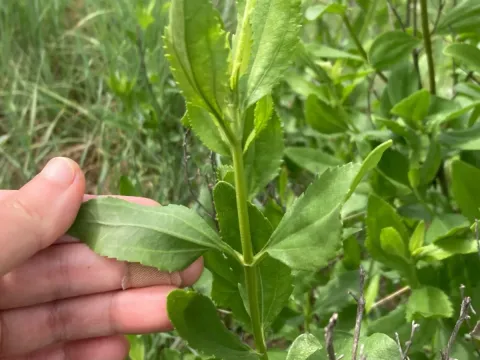
Marsh elder
Iva frutescens
Marsh elder, or Iva frutescens, is a perennial subshrub belonging to the Asteraceae family, native to the coastal salt marshes of North America.
What the section contains
Marsh elder
This plant is classified as a halophyte, which means it has evolved specialized biological mechanisms to thrive in environments with high salinity where other crops fail.
In terms of agricultural requirements, the species demands full sunlight exposure and thrives best when soil moisture is consistent and enriched with minerals.
The plant demonstrates significant tolerance to physiological drought, utilizing its succulent-like leaf structure to regulate water balance effectively during peak sun exposure.
Proper cultivation management involves mimicking the natural coastal hydro-regime, ensuring that the soil remains brackish and provides sufficient drainage to prevent stagnation.
Fungal pathogens represent the most significant threat to the health of marsh elder populations, particularly during periods of high humidity and poor air circulation.
Various species of aphids and spider mites can colonize the foliage, draining nutrients and weakening the plant's ability to resist secondary infections.
Root rot becomes a critical risk factor if the water table remains stagnant for prolonged periods without adequate oxygenation of the rhizosphere.
Integrated pest management strategies must be employed to identify early signs of infestations before they spread across the entire agricultural plot.
Maintaining the chemical balance of the growing substrate is essential, as fluctuations in salinity levels can stress the plant and increase its vulnerability to diseases.