
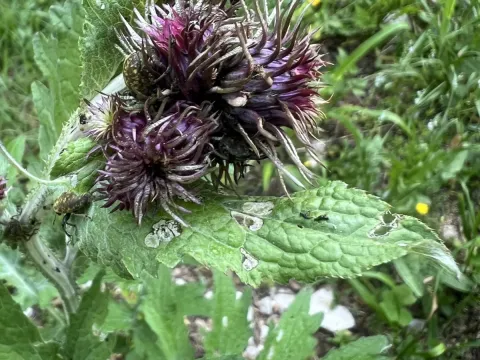
Marsh thistle
Carduus personata
Carduus personata, commonly known as the marsh thistle, is a biennial plant belonging to the Asteraceae family. It is recognized for its significant role in supporting biodiversity and its potential as a specialized crop for honey production in temperate regions.
What the section contains
Marsh thistle
The plant thrives in nutrient-rich, moist soils and is typically found in mountainous areas, along stream banks, and in humid meadow environments. It requires a stable moisture supply to maintain its vigorous growth and high nectar production capacity throughout the flowering season.
Climatic requirements focus on cool to moderate temperatures and high humidity levels. The marsh thistle demonstrates excellent winter hardiness, as its first-year basal rosette is designed to survive harsh conditions, ensuring rapid growth during the second year.
Agricultural management for this plant involves precise seedbed preparation to ensure optimal germination. Spacing is crucial, as the plant develops a large vegetative structure, necessitating sufficient room to maximize individual plant yield and quality of the raw material.
Economically, the cultivation is targeted at apiculture, where it serves as a robust late-season nectar source. Its ability to extract minerals from deep soil layers also makes it a valuable component in crop rotation strategies aimed at soil rejuvenation.
Pathogens such as powdery mildew represent the primary biological threat to the crop, especially in environments with poor air circulation. Implementing proper field hygiene and avoiding dense plantings can significantly mitigate the risk of fungal spread.
Insects like aphids and specialized weevils can feed on the buds, impacting total seed yield. Integrated pest management, focusing on biological controls, is highly recommended to protect the crop without compromising the chemical profile of the plant extracts.