
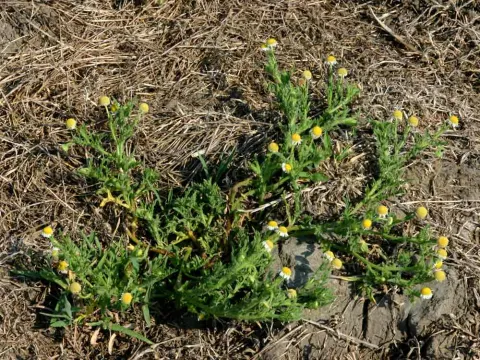
Matricaria hispida
Matricaria hispida
Matricaria hispida belongs to the Asteraceae family and requires careful attention during the sowing phase to ensure optimal development. Seeds are typically sown in early spring when the soil temperature consistently reaches 10-12 degrees Celsius.
What the section contains
Matricaria hispida
Due to the small size of the seeds, they should be sown shallowly, ideally at a depth of no more than 0.5 centimeters. Using a roller after sowing is recommended to ensure good contact between the seed and the soil, which facilitates even germination.
In commercial cultivation, row sowing is standard, with spacing of 30 to 45 centimeters between rows. This layout enables efficient mechanical weeding and nutrient application throughout the growing season.
Autumn sowing is also practiced in regions with mild winters, allowing the seeds to undergo natural stratification, which often leads to more vigorous early spring growth and higher seedling survival rates.
Seed quality is paramount; therefore, only high-germination seeds should be used. Farmers should calculate the seeding rate based on the specific soil fertility to avoid overcrowding and resource competition among the young plants.
This crop thrives in well-lit environments, as full sun exposure is essential for the accumulation of active phytochemical compounds in the flower heads. Shade negatively impacts both the yield and the oil quality.
Well-drained, fertile sandy loam or silty soils with a neutral pH are ideal. The crop is sensitive to waterlogging, so fields with good natural drainage or artificial tiling are preferred to prevent root system suffocation.
Regular maintenance, including shallow cultivation between rows, is necessary to keep the plot free from weeds, which can significantly inhibit the development of young plants during the first two months.
While the plant shows good resilience to temporary moisture deficits, consistent water supply during the budding and blooming stages is critical to producing large, high-quality flower heads.
Fertilization should be balanced, focusing on organic amendments and potassium-rich inputs. Excess nitrogen should be avoided, as it promotes excessive vegetative growth at the expense of flowering performance.
The yield of flower heads generally ranges between 600 and 1200 kilograms of dry raw material per hectare, depending on local environmental conditions and the intensity of the agronomic management applied.
Effective crop rotation is essential; planting Matricaria hispida in the same field should be avoided for at least three to four years to prevent the buildup of soil-borne pathogens and nutrient exhaustion.
Advanced harvesting techniques are utilized to maintain high throughput while ensuring that only high-quality flower heads are collected. This minimizes the presence of stems and leaves, which are considered impurities.
Biostimulants can be used to enhance root strength and increase the number of flowers produced per plant, directly contributing to a higher total yield at the end of the season.
Consistent annual yields make this crop a sustainable choice for pharmaceutical and cosmetic producers who require high-quality herbal ingredients for their manufacturing processes.
Powdery mildew and Fusarium wilt are among the primary threats to the crop, especially in humid and warm climates. Preventive measures such as maintaining proper plant density and good ventilation are key to management.
Aphids represent the most significant pest risk, often colonizing the stems and flower buds. These insects can damage the developing tissue, leading to stunted flower growth and reduced market value.
Integrated Pest Management (IPM) strategies, including the use of beneficial predatory insects and bio-insecticides, are preferred over broad-spectrum chemical treatments to ensure the safety of the medicinal product.
Frequent field inspections are necessary to identify potential outbreaks of rust or other fungal diseases. Early detection allows for localized management, preventing the need for widespread treatment.
Crop health is also influenced by the nutrient status of the soil; plants with adequate potassium and magnesium intake tend to show greater resistance to environmental stress and pathogenic infections.
Harvesting is performed during the mass blooming phase, specifically when the ray florets are horizontal and the central disc florets are beginning to open. This timing is essential to ensure maximum efficacy.
Manual harvesting ensures the highest quality of the collected material, as pickers can selectively choose only fully matured heads while leaving out unwanted botanical matter.
Post-harvest logistics must be extremely efficient; drying should commence within a few hours to prevent the raw material from heating up, which would cause the degradation of essential oils.
Drying is conducted in specialized climate-controlled facilities at temperatures not exceeding 40 degrees Celsius. This carefully controlled environment preserves the aromatic compounds and color of the petals.
Once dried to a moisture content of approximately 12-14 percent, the product is packaged in air-tight, moisture-proof containers and stored in a cool, dark environment to maintain its potency until shipment.