
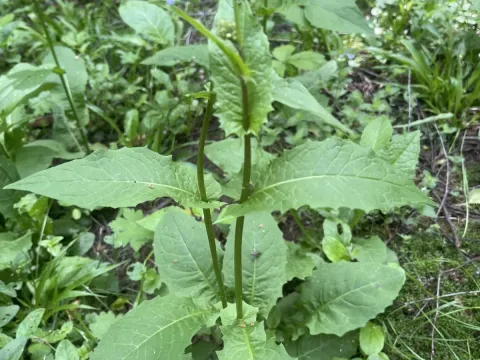
Marsh hawk's-beard
Crepis paludosa
Marsh hawk's-beard (Crepis paludosa) is a perennial herbaceous plant belonging to the Asteraceae family. It is a moisture-demanding species, typically found in wet habitats such as marshes, fens, swampy woodlands, and alongside stream banks.
What the section contains
Marsh hawk's-beard
This plant exhibits a remarkable adaptation to anaerobic soil conditions. It thrives in soils that are consistently damp, nutrient-rich, and characterized by high organic matter content, typically found in low-lying riparian zones.
Botanically, the plant is identified by its upright, mostly unbranched stem that can grow up to 90 cm in height. Its leaves are lanceolate, and its yellow flower heads, arranged in a loose cyme, provide a distinct aesthetic and ecological signature.
Regarding climatic requirements, Crepis paludosa is highly tolerant of cool and humid conditions. It is well-adapted to the temperate climates of Europe and Asia, showing resilience against frost during the early growth stages in spring.
In terms of land use, marsh hawk's-beard serves as a natural component of meadow ecosystems. It contributes to the biodiversity of damp pastures and provides valuable nutrients when consumed by livestock as part of natural grazing rotations.
The primary threats to marsh hawk's-beard populations are fungal diseases, which are exacerbated by high humidity and poor air circulation within dense vegetation. Rust fungi and various leaf spots are the most common pathological concerns.
Insect pests, such as aphids and specialized coleopterans, can cause damage to the foliage and flower buds. Significant infestations may reduce the overall vigor of the plant, especially in areas where environmental stress is already present.
The most severe threat to its survival remains habitat loss through drainage and land reclamation. As the water table drops due to human-induced drainage, the specific ecological niche required by Crepis paludosa disappears entirely.
Competition from invasive or more aggressive grass species in disturbed areas can also lead to the decline of local populations. The plant struggles to maintain its territory once the competitive balance of the meadow ecosystem is shifted.
Inappropriate management practices, including overgrazing, significantly damage the plant's basal rosette. Since the plant relies on healthy vegetative growth for survival, regular disturbance cycles that are too frequent can exhaust its energy reserves.