
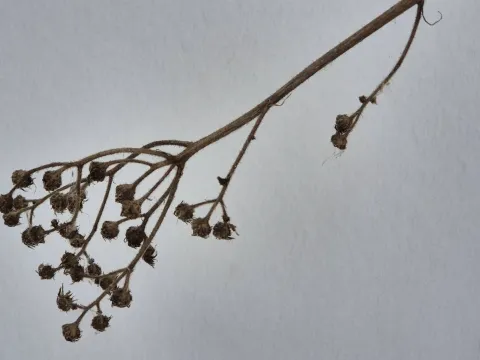
Marsh sowthistle
Sonchus palustris
Marsh sowthistle is not a traditional agricultural crop, so standardized sowing schedules are not applied. In its natural habitat, the plant reproduces via seeds that mature during late summer and autumn.
What the section contains
Marsh sowthistle
The seeds are equipped with a pappus, enabling them to travel long distances via wind. Natural germination occurs in moist soil immediately after seed dispersal, allowing for winter stratification.
For cultivation purposes, experts recommend sowing the seeds outdoors before winter. This mimics natural conditions and breaks seed dormancy, ensuring higher germination rates in the spring.
Maintaining high humidity in the substrate is crucial during the germination phase, as the seeds are highly sensitive to desiccation and require consistent moisture to sprout.
It is important to sow seeds at a very shallow depth. Being small, the seeds require access to light, which serves as a biological trigger for the onset of the growth process.
Marsh sowthistle (Sonchus palustris) is a perennial herbaceous plant belonging to the Asteraceae family. It typically thrives in wetlands, marshy meadows, and along the banks of rivers and lakes across Europe and Western Asia.
The plant is defined by its robust vertical rhizome, which allows it to thrive in saturated, oxygen-poor soil environments where other competing vegetation might struggle to establish itself.
For optimal development, it requires nutrient-rich, humus-heavy soils. The species prefers neutral to slightly acidic pH levels to facilitate the uptake of minerals necessary for its rapid stem growth.
The species is highly photophilous and requires full sun exposure for most of the day. While it tolerates partial shade in coastal environments, full light is necessary for vigorous flowering and seed production.
Temperature requirements are consistent with a temperate climate. The plant is well-adapted to the moisture cycles of wetland ecosystems, provided that soil moisture remains high throughout the vegetative season.
As a member of the Asteraceae family, marsh sowthistle is prone to several fungal diseases, particularly powdery mildew, which manifests as white patches on the foliage during humid periods.
Rust fungi are another potential threat, often appearing on the underside of leaves. This can lead to decreased photosynthetic activity and negatively impact the plant's overall health and vigor.
Insect pests, notably aphids, frequently colonize the tender tissues of the flower heads and young stems, causing sap depletion and transmitting various viral pathogens that stunt growth.
Leaf miners can also affect the plant, as larvae tunnel into the leaves, leaving visible trails and potentially compromising the integrity of the photosynthetic tissue if infestations are heavy.
To mitigate these threats, it is advised to ensure adequate spacing between plants to promote airflow and to remove any severely infected plant matter to prevent the spread of spores and pests.