
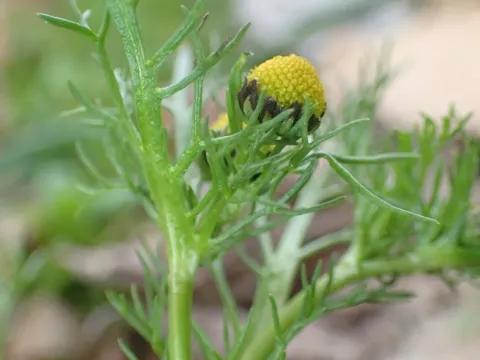
Matricaria aurea
Matricaria aurea
Matricaria aurea, a member of the Asteraceae family, is an annual herb that thrives in temperate climates. Seeding is best conducted in early spring once soil temperatures reach a consistent 6-8 degrees Celsius.
What the section contains
Matricaria aurea
The seeds are small and require shallow sowing at a depth of about 0.5 centimeters to ensure optimal light exposure and germination rates.
Rows should be spaced approximately 30 to 45 centimeters apart, allowing for adequate plant development and easier mechanical maintenance throughout the growing season.
A fine, firm seedbed is essential for successful establishment, so rolling the soil after sowing is a highly recommended agricultural practice.
In regions with mild winters, autumn sowing is also a viable strategy, as it often leads to stronger, more vigorous early spring seedlings.
This crop demands full sun to achieve maximum development of essential oils within the flowers, which is critical for its market value.
Well-drained, light-textured soils such as sandy loams are ideal; the crop is highly sensitive to waterlogging, which can easily induce root rot.
While the plant shows good drought tolerance, regular but moderate moisture is necessary during the vegetative stage to ensure healthy plant vigor.
Inter-row cultivation is essential not only to control weeds but also to preserve soil structure and optimize nutrient uptake by the plants.
Proper nutrient management involves focusing on phosphorus and potassium to boost reproductive performance rather than excessive nitrogen, which favors leaf growth.
Disease pressure is primarily related to fungal pathogens, such as powdery mildew, especially in environments with high humidity and poor air circulation.
Common pests include aphids and plant bugs that attack the flower heads, significantly reducing the quality and quantity of the harvestable product.
Effective management relies on a combination of good crop rotation practices and early identification of pest colonization before they reach economic thresholds.
Integrated pest management strategies should prioritize the use of biological control agents and environmentally safe products to protect crop purity.
Regular field scouting is vital, particularly during the budding phase when the plant is most vulnerable to both sucking insects and foliar fungal infections.
The harvest must occur during peak flowering to capture the highest concentration of active compounds, ensuring high-quality medicinal output.
Mechanical harvesting is common in commercial operations, utilizing specialized headers that gently strip the flower heads from the main stems.
Freshly harvested plant material is highly perishable and must be processed or moved to drying facilities immediately to prevent heating and spoilage.
Drying should be performed at controlled temperatures between 40 and 45 degrees Celsius to preserve volatile oils and natural pigmentation of the florets.
Final storage conditions require a cool, dark, and dry environment to maintain the shelf life and potency of the dried Matricaria aurea product.