
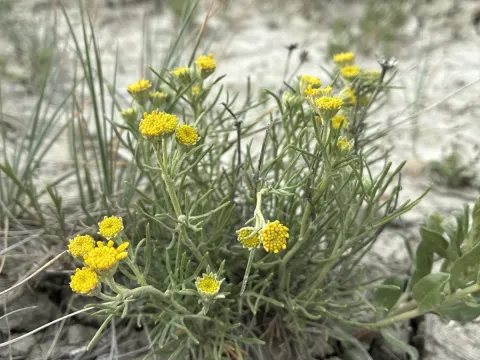
Hymenoxys
Hymenoxys
Hymenoxys seeds are typically sown in early spring or late autumn, depending on the climatic zone. They require stratification to break dormancy and ensure uniform germination.
What the section contains
Hymenoxys
For indoor propagation, seeds should be surface-sown on moist, well-draining soil mixes. Since they are light-dependent, covering them with soil should be avoided.
Maintaining a temperature range of 18–22 degrees Celsius is critical during the initial germination phase. High humidity levels should be sustained until seedlings establish.
Seedlings should be hardened off before transplanting into permanent locations. This process helps them adapt to direct sun and varying outdoor temperatures.
Spacing between plants is determined by the specific variety's habit, generally requiring about 25–30 centimeters to allow for adequate airflow and plant development.
Hymenoxys thrives in full sun exposure. It is a heliophilic species that requires at least six to eight hours of direct sunlight daily to maintain its structural integrity.
The ideal soil profile for Hymenoxys is sandy or gritty, providing excellent drainage. The plant is highly sensitive to waterlogged conditions, which lead to root rot.
Fertility requirements are relatively low. Excessive nitrogen application promotes weak vegetative growth at the expense of flowering and overall plant vigor.
Once established, the crop demonstrates exceptional drought tolerance. It is well-suited for xeriscaping and regions with limited irrigation resources.
The pH balance should remain neutral to slightly alkaline. Acidic soils may require the addition of lime to achieve the optimal growing conditions for the genus.
Root and crown rot are the most common pathogens affecting Hymenoxys. These issues are almost always linked to poor drainage or overly humid microclimates.
Powdery mildew can occur if there is insufficient air circulation around the foliage. Thinning out plantings is an effective cultural practice to mitigate this risk.
Aphids often target new buds, causing stunted growth and poor flower quality. Integrated pest management strategies are recommended if infestation thresholds are met.
Slugs and snails may damage younger seedlings during damp seasons. Protective barriers or traps can be implemented to maintain plant health.
Effective management includes regular monitoring for early signs of distress, ensuring proper site preparation, and preventing the accumulation of stagnant moisture.