
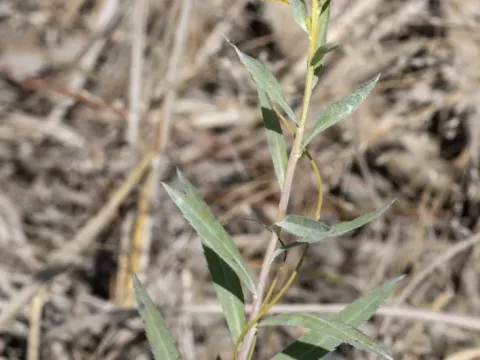
Leavenworth's goldenrod
Solidago leavenworthii
Leavenworth's goldenrod (Solidago leavenworthii) is a perennial herbaceous plant belonging to the Asteraceae family. It is recognized for its robust growth habit and is primarily propagated through seeds or rhizome division.
What the section contains
Leavenworth's goldenrod
For optimal results, seeds should be sown in the spring once the soil temperature has consistently exceeded 12 degrees Celsius. Surface sowing is recommended as the seeds require light for germination.
In greenhouse environments, seeds can be started in trays during late winter. This ensures a uniform stand before transplanting into the field once the risk of frost has passed.
When using vegetative propagation, rhizome segments should be planted at a depth of 5-10 centimeters. This method ensures faster establishment compared to direct seeding.
Adequate spacing is crucial for airflow; planting in rows 50 centimeters apart with 40 centimeters between plants is recommended for maximizing yield.
This species thrives in full sun exposure. While it exhibits tolerance to partial shade, full sunlight is essential for strong stem development and abundant flower production.
It prefers well-drained, fertile soil. While it can adapt to various soil types, including sandy or clay-loam, waterlogging must be avoided to prevent root rot.
The plant is moderately drought-tolerant once established. However, during the peak growing season and flower bud formation, consistent moisture levels significantly enhance biomass.
Nutrient management involves applying balanced NPK fertilizers in early spring. Avoid excessive nitrogen, which can lead to rapid, weak growth prone to lodging.
Regular weeding and inter-row cultivation are necessary during the first year to minimize competition from fast-growing weeds and ensure proper plant development.
Powdery mildew is the most common fungal disease, particularly in humid or overcrowded conditions. Improved ventilation and proper thinning of the plants help mitigate this risk.
Rust diseases may appear as orange or brown pustules on the foliage. Application of systemic fungicides is recommended if initial signs of infection are observed.
Aphids are the primary insect pests, often attacking new growth and infesting flower heads. Infestations can be managed through biological control or targeted insecticidal soaps.
Plant bugs can also cause cosmetic damage to the blooms. Monitoring during the bud stage is essential for timely intervention and crop protection.
Sanitation is key to disease prevention. Removing and destroying infected plant debris at the end of the season reduces the inoculum for the following year.