
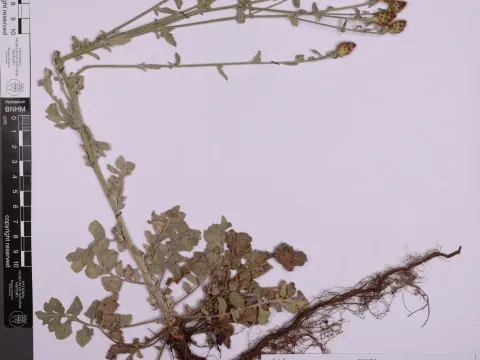
Wedge-leaved knapweed
Centaurea cuneifolia
Wedge-leaved knapweed (Centaurea cuneifolia) is a member of the Asteraceae family. This perennial herb is native to the Balkan Peninsula, where it has evolved to thrive in dry, rocky environments and mountainous meadow terrains.
What the section contains
Wedge-leaved knapweed
The plant requires well-drained, sandy, or rocky soil with a neutral to slightly alkaline pH. It is highly adapted to arid conditions and suffers significantly if the root system is exposed to prolonged waterlogging or poor drainage.
Optimal growth is achieved in full sun, as the plant is a heliophyte. Adequate exposure to light is crucial for maintaining its compact, rosette-forming habit and for the induction of flowering throughout the summer season.
Botanically, it is characterized by wedge-shaped leaves with distinct pubescence, which helps in reducing transpiration. The root system is deep and taproot-based, allowing the plant to reach groundwater in arid conditions.
In modern agricultural settings, this species is cultivated primarily for ornamental use in dry gardens and as a support plant for pollinator conservation, given its high attractiveness to beneficial insects.
The primary threats to Centaurea cuneifolia are soil-borne pathogens triggered by excessive moisture. Root rot is the most common cause of plant failure, particularly in poorly aerated or heavy clay soils.
Powdery mildew can become a significant issue during periods of high humidity. To mitigate this risk, it is essential to ensure proper spacing between plants, which facilitates airflow and prevents the development of fungal spores.
Pests such as aphids and spider mites may occasionally infest the plants, especially when the species is grown under sub-optimal drought stress. Regular monitoring during the peak growing season is recommended.
Weed competition poses a severe threat during the establishment phase. As a relatively slow-growing perennial in its early stages, it requires clean cultivation to prevent it from being choked by more aggressive weeds.
Biosecurity measures, such as sourcing pathogen-free stock and avoiding planting in areas with a history of fungal outbreaks, are fundamental components of a successful agricultural management strategy for this crop.