
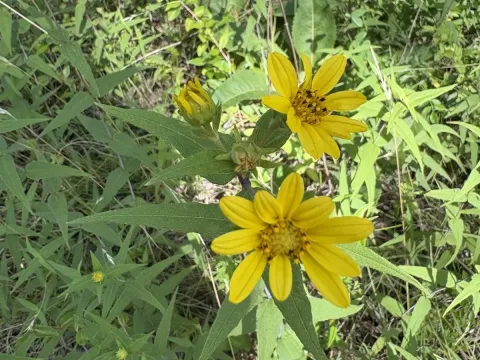
Woodland sunflower
Helianthus divaricatus
Woodland sunflower propagates primarily through vegetative methods, such as rhizome division, which is the most reliable technique for this perennial species.
What the section contains
Woodland sunflower
The best time for planting divisions is in early spring once the soil warms up, or in early autumn to allow the plants to establish roots before winter frost.
While seed propagation is possible, it is less common in agricultural practice due to lower germination rates compared to division methods.
It is essential to maintain a spacing of at least 50–60 centimeters between plants, as the rhizomes tend to spread vigorously and fill available space.
After planting, the soil should be thoroughly watered and mulched to create an optimal microclimate for root development during the initial growth phase.
This crop prefers open, well-lit areas, although it is naturally adapted to woodland edges where it receives filtered or partial sunlight throughout the day.
The plant is not highly demanding regarding soil types, but it thrives best in sandy loam or well-drained loamy substrates with moderate organic content.
It exhibits high cold tolerance typical of North American species, making it capable of surviving harsh winters with proper subterranean protection.
During the active growing season, the woodland sunflower is moderately water-demanding but remains relatively drought-tolerant due to its developed rhizome system.
For healthy growth, moderate application of balanced mineral fertilizers during the budding stage can enhance flower production and overall plant vigor.
As an agricultural or ornamental crop, the woodland sunflower is not evaluated based on seed yield in the same manner as commercial oilseed sunflowers.
Its primary value lies in the rapid production of biomass from perennial rhizomes, which can be useful for soil stabilization and as a green manure source.
When grown in dense stands, the crop provides high green mass density, contributing significantly to organic matter accumulation in the field.
Productivity in terms of inflorescences varies based on soil fertility, but a mature plant typically forms numerous flower heads during a single season.
The extended flowering period in late summer makes this species a valuable asset for local pollinator populations and ecological restoration projects.
Powdery mildew is the most common disease affecting this species, particularly in dense plantings where airflow is restricted and humidity levels remain high.
Pests such as aphids may infest young shoots and flower buds, requiring regular monitoring and, if necessary, the application of appropriate control measures.
Root rot poses a significant risk in poorly drained soils, making it crucial to ensure proper surface water management during wet weather cycles.
Rust infections can occur during seasons with excessive rainfall, which may negatively impact leaf photosynthesis and reduce the plant's overall health.
- Regular weeding around the base of the plant.
- Sanitary pruning of dead stems at the end of the growing season.
- Thinning dense stands to improve ventilation and air circulation.
The harvest of the above-ground biomass is typically performed in late autumn after the stems have naturally senesced and turned brown.
It is recommended to cut the stems 5–10 centimeters above the soil level to protect the dormant rhizomes that survive the winter underground.
The harvested plant materials can be shredded and used as mulch or processed into compost, provided the plants are free from fungal infections.
Dividing rhizomes for propagation or thinning out established beds is performed either in late autumn or early spring before active sap flow begins.
Storage of propagation material requires a cool, shaded environment with slightly moist substrate to prevent desiccation or rot of the rhizomes.