
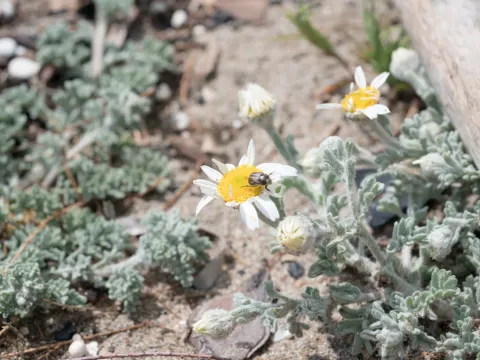
Woolly chamomile
Anthemis tomentosa
Woolly chamomile (Anthemis tomentosa) is a distinctive member of the Asteraceae family, characterized by its fine, hair-like foliage and small, persistent flower heads.
What the section contains
Woolly chamomile
The ideal time for sowing this crop is either early autumn or early spring, depending on the climatic zone and the expected soil temperature levels.
Seeds should be sown shallowly into a finely prepared seedbed, as they require light to stimulate successful germination and early seedling development.
For uniform germination, it is essential to maintain constant soil moisture for the first few weeks after planting without causing saturation of the medium.
Establishing proper plant spacing is crucial to prevent competition for light and nutrients, typically requiring rows at least 30 centimeters apart.
This species thrives in open, sunny environments and is highly sensitive to shading, which can significantly reduce both biomass production and oil content.
The crop prefers well-drained, sandy or loamy soils that mimic its natural habitat; it performs poorly in heavy, clay-based soils that retain too much water.
It is known for its remarkable drought tolerance once established, though supplemental irrigation during the peak flowering stage can improve total yield.
Nutrient requirements are relatively low compared to intensive crops, as excessive nitrogen often leads to succulent growth that is more prone to damage.
Temperature stability is important, but the plant is resilient to both high daytime heat and moderate night-time cooling common in its native range.
The primary threats to the crop include various fungal diseases that thrive in high humidity, such as powdery mildew, which can cover the foliage in white spores.
Aphids and spider mites are the most common pests, often appearing during hot and dry spells when the plant's natural defenses may be temporarily stressed.
Pest management should focus on cultural practices like row spacing and sanitation, which minimize the environmental conditions favorable to infestations.
In cases of severe outbreaks, organic-approved insecticides or specific fungicides may be necessary to preserve the quality of the raw floral material.
- Implementing strict field hygiene to remove diseased plant debris.
- Monitoring for early signs of pest colonization on the undersides of leaves.
- Rotating crops to avoid build-up of soil-borne pathogens.