
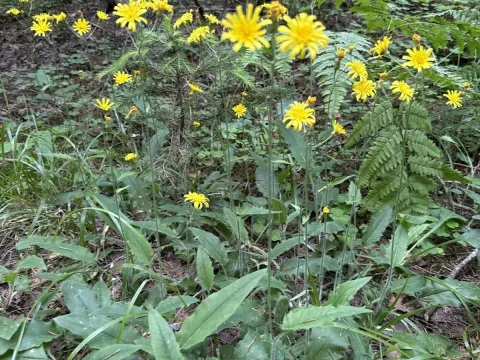
Wood hawkweed
Hieracium sylvularum
Wood hawkweed (Hieracium sylvularum) is a perennial herb belonging to the Asteraceae family. It is typically found in woodland environments and forest edges, where it contributes to the local herbaceous layer structure.
What the section contains
Wood hawkweed
Botanically, the plant is distinguished by a basal rosette of leaves and a flowering stem that elevates its inflorescences to improve pollination success. The leaves often display fine hairs, helping the plant regulate water retention.
Regarding soil requirements, this species favors well-drained, nutrient-rich soils. It shows high adaptability to various soil textures, from loamy sand to slightly heavier silt soils, provided there is no long-term waterlogging.
The plant demonstrates significant climate resilience, being well-adapted to the temperate zones of Europe. It can withstand frost and fluctuating temperatures, making it a robust perennial that persists through varying seasonal cycles.
In terms of agricultural significance, while not a mainstream commercial crop, it is valued as an important nectar source for pollinators and as a component of ecological buffers in rural landscapes.
The species can occasionally be affected by powdery mildew, a fungal disease that tends to develop during humid summer weather when air circulation is poor.
Pests such as aphids may occasionally feed on the sap of the plant, though the presence of bitter latex in the stems generally serves as an effective deterrent against many herbivores.
Root damage caused by soil-dwelling larvae can occur in poorly managed soils where crop rotation is not strictly followed, leading to weakened plant health.
Maintaining proper spacing between plants is the primary cultural practice to mitigate risks of fungal pathogen spread and ensure healthy growth.
Minimal intervention is usually required for this plant, as it thrives best under low-maintenance conditions that mimic its natural habitat characteristics.