
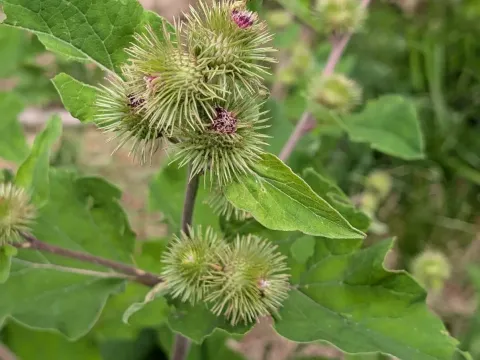
Wood Burdock
Arctium nemorosum
Wood Burdock (Arctium nemorosum) is a biennial herbaceous plant belonging to the Asteraceae family. It is recognized by its large leaves and significant root mass produced during the first year of growth.
What the section contains
Wood Burdock
The plant thrives in fertile, well-drained loamy soils rich in organic matter. It prefers sites with moderate moisture levels, often mirroring its natural habitat along forest clearings and riparian edges.
Regarding climate, it is highly adaptive to temperate regions, benefiting from consistent rainfall during the vegetative stages. Excessive heat can stress the plant, leading to stunted root development.
Proper soil preparation is crucial; deep tillage allows the taproot to penetrate deeply, which is essential for maximizing the yield of active compounds such as inulin.
Cultivation should ideally avoid waterlogged areas, as stagnant water significantly increases the risk of root rot and compromises the overall health and quality of the harvest.
The harvesting of Wood Burdock roots is typically performed in late autumn of the first year, when the plant has ceased its vegetative expansion and stored energy in the root system.
Mechanized lifting is required to extract the taproots effectively without causing breakage, which is vital for maintaining the market value of the primary crop.
Post-harvest handling involves thorough washing to remove all soil debris, followed by trimming of the aerial parts to ensure a clean final product.
Drying protocols must be strictly followed, utilizing low-heat airflow to prevent the degradation of heat-sensitive chemical components found within the roots.
Once dried, the product should be packed in breathable containers and kept in a cool, dry warehouse environment to prevent moisture re-absorption and subsequent degradation.