
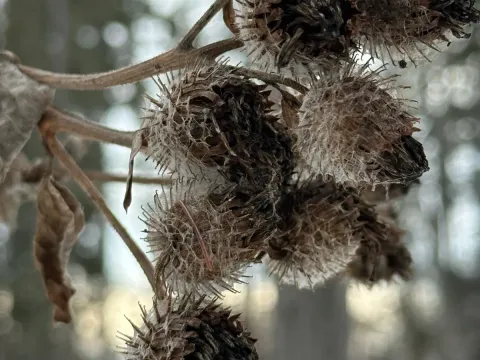
Woolly burdock
Arctium tomentosum
Woolly burdock (Arctium tomentosum) is a biennial plant belonging to the Asteraceae family. It is distinguished by its robust taproot and a rosette of large, webbed-hairy leaves during its first year of growth.
What the section contains
Woolly burdock
Originally native to Eurasia, this plant has adapted to diverse environments across temperate zones. It flourishes in nitrogen-rich soils found in fields, forest edges, and disturbed areas where competition from other vegetation is manageable.
Optimal growth requires well-drained, fertile soil with a neutral pH level. While the plant is hardy, it performs best in sunny locations where it can access sufficient moisture without waterlogging, which is detrimental to root health.
Cultivation practices involve deep soil preparation to allow the taproot to develop fully. As a biennial crop, the plant devotes its first year to accumulating energy reserves in the roots, making soil quality critical during this initial stage.
Agricultural maintenance includes periodic weeding and keeping the soil loosened, especially in the early stages of the vegetative cycle. Proper spacing is essential to ensure adequate airflow and prevent the accumulation of excess humidity.
The main pathological threat to woolly burdock is powdery mildew, which appears as a white dust on the foliage. This condition is usually exacerbated by poor ventilation and high humidity, requiring targeted fungicidal treatment.
Pests, particularly the burdock seed moth and various aphid species, can significantly impact crop quality. These insects primarily target the reproductive parts and succulent young growth, necessitating early detection and intervention.
Root rot caused by fungal pathogens is a risk if the soil becomes compacted or waterlogged for extended periods. Maintaining good drainage is the most effective cultural practice to mitigate this risk.
Environmental stress, such as extreme heat or prolonged drought, can make the plant more susceptible to opportunistic diseases. Proper irrigation management acts as a preventive measure against such vulnerabilities.
Integrated pest management strategies, including the use of beneficial insects and biological controls, are highly recommended to keep the burdock crop healthy without relying heavily on chemical inputs.
The harvest of burdock roots is generally scheduled for the end of the first year of growth. At this point, the roots are at their peak for content of inulin, a valuable polysaccharide used in the food and medical industries.
Mechanized extraction involves digging deep trenches to lift the roots intact. Farmers must be careful to avoid breakage, as damaged roots are more prone to enzymatic degradation and contamination during the drying process.
Post-harvest processing requires immediate cleaning, washing, and slicing of the roots. This speeds up the drying process and ensures that the final product is clean and suitable for commercial storage.
Drying is conducted in climate-controlled environments. Keeping the temperature below 50 degrees Celsius ensures that the bioactive compounds, such as essential oils and tannins, are preserved for long-term effectiveness.
Finally, the dried material is stored in moisture-proof containers in cool, dark environments. This maintains the quality of the raw material until it is shipped to manufacturing facilities for processing.