
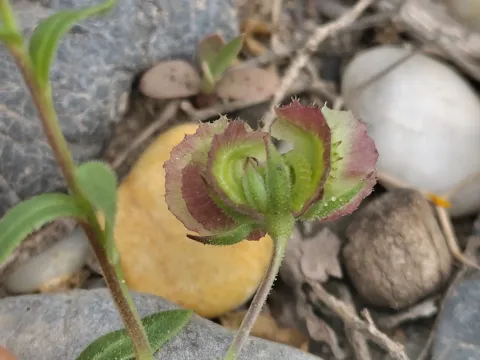
Winged calendula
Calendula tripterocarpa
Winged calendula is an annual herbaceous plant belonging to the Asteraceae family. It is distinct from the common pot marigold due to the unique winged structure of its seeds, which facilitates wind-assisted seed dispersal in its native habitat.
What the section contains
Winged calendula
Sowing typically begins in early spring, once soil temperatures consistently reach 5-8 degrees Celsius. Seeds are drilled in rows spaced 30 to 40 centimeters apart, allowing for efficient mechanical weeding and nutrient management during the early stages of growth.
Optimal germination requires sustained soil moisture during the first two weeks post-sowing. The planting depth should be approximately 2 to 3 centimeters, depending on the soil texture, ensuring that the seeds are sufficiently covered to prevent drying out.
This crop exhibits high germination vigor, allowing for uniform seedling emergence under diverse temperate conditions. In commercial agricultural operations, precise seed distribution is essential for maximizing density and total biomass production.
Crop rotation is critical to success; planting in fields previously occupied by grains or fallow land is preferred. Avoiding continuous cultivation of the same species helps maintain soil health and reduces the pressure from soil-borne pathogens.
The plant thrives in full sun, as shading can lead to elongated, weak stems and significantly reduced flowering intensity. Proper site selection ensures that the crop receives enough solar energy for maximum oil and pigment accumulation in the petals.
Winged calendula favors well-drained, fertile loam or sandy soils with a neutral pH. While it is somewhat adaptable, avoiding waterlogged sites is vital, as excessive moisture leads to root rot and poor development of the vegetative parts.
Effective water management involves supplying consistent moisture during the blooming phase, but preventing saturation. Irrigation should be applied directly to the base to keep foliage dry and reduce the risk of secondary infections during the growing season.
Agronomic maintenance includes periodic mechanical cultivation between rows to break up crusts and remove opportunistic weeds. Once the canopy closes, the plant's natural competition helps suppress weed growth through the remainder of the season.
The crop is relatively hardy, tolerating minor temperature fluctuations. Its development is best supported by a moderate climate range, where temperatures remain within 18-22 degrees Celsius during the peak of its vegetative growth period.
Powdery mildew is the most significant disease, particularly in humid conditions with limited airflow. Implementing proper plant spacing and ensuring good ventilation are key preventative strategies for managing this fungal threat in field conditions.
Various leaf spot diseases can occur under unfavorable weather patterns. Regular scouting for early symptoms and removing infected plant tissue helps prevent large-scale outbreaks that could otherwise compromise the commercial yield of the crop.
Pests such as aphids and spider mites may infest the plant, extracting nutrients and weakening the overall vigor. Integrated pest management, including the use of targeted biological controls, is often sufficient to keep these populations below the threshold.
Leaf miners can occasionally damage foliage, creating visible tunnels. While usually not fatal, heavy infestations can reduce the photosynthetic area of the plants, thus requiring monitoring and timely intervention if damage levels exceed established economic thresholds.
Maintaining biological diversity around the fields and preventing proximity to other host-sharing Asteraceae plants significantly limits the risk of disease transmission. Proper field hygiene remains a cornerstone of successful agricultural production.
Harvesting is performed during the peak flowering stage when the petals are fully expanded and vibrant. It is crucial to collect only during dry, sunny conditions, as moisture on the heads promotes microbial growth and rapid spoilage post-harvest.
Because the crop flowers unevenly, harvesting is typically a repeated process conducted over several weeks. Frequent picking of mature heads encourages the plant to allocate more energy into producing new buds, thereby extending the total harvest season.
Post-harvest, the raw material must be dried immediately in a shaded, well-ventilated area or in mechanical dryers at temperatures not exceeding 45 degrees. Careful thermal management is essential to preserve the volatile oils and pigments.
Seed production requires leaving a portion of the crop in the field until the heads turn brown. Seeds must be collected promptly upon maturity to prevent shattering and loss, as they are naturally adapted to disperse from the mother plant.
Final storage should be in clean, airtight containers in a cool, dark location. Protecting the dried harvest from heat and light ensures that the crop retains its medicinal and industrial quality for extended periods of storage or transport.