
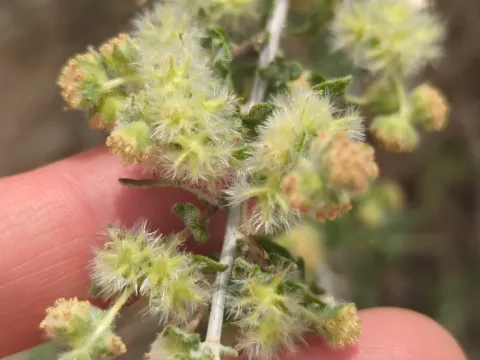
Woolly-flower ragweed
Ambrosia eriocentra
Woolly-flower ragweed (Ambrosia eriocentra) is a perennial shrub species belonging to the Asteraceae family. It is native to the arid desert regions of the southwestern United States, primarily thriving in the Mojave and Sonoran deserts.
What the section contains
Woolly-flower ragweed
The plant is specifically adapted to extreme desert environments, characterized by its dense woolly pubescence. This characteristic serves as a crucial adaptation to minimize water loss and protect the plant tissues from intense solar radiation and high temperatures.
Ambrosia eriocentra prefers well-drained, sandy, or rocky soils. It is commonly found on mountain slopes, bajadas, and in dry wash areas where it can exploit deep-seated soil moisture that remains inaccessible to less drought-tolerant species.
The root system of the woolly-flower ragweed is highly developed, allowing the plant to persist through extended periods of drought. Reproduction occurs via seeds and vegetative expansion, which helps the species stabilize in highly specialized and harsh ecological niches.
This species is not utilized in agricultural production. Instead, it plays a vital ecological role in soil stabilization within natural desert ecosystems, where it functions as a primary producer in environments unsuitable for standard crop cultivation.
Natural pathogens, such as specific rust fungi, are known to interact with Ambrosia eriocentra populations in their native habitats. These biological agents play a significant role in regulating the density of the species.
Insect herbivores, including various species of weevils and leaf beetles, often feed on the foliage and stems. These natural enemies are essential in maintaining the ecological balance within desert plant communities where the ragweed is present.
Environmental stressors like prolonged drought or flash floods can impact the health of the plants. However, the species is remarkably resilient and well-adapted to the volatile nature of desert weather patterns.
Management of this species is typically restricted to containment in regions where it might act as an allergenic hazard. In agricultural settings, it is treated as an invasive threat that requires systemic herbicide intervention for effective control.
Due to its status as a non-agricultural plant, there is no standardized agrotechnical schedule for its cultivation. Any control strategies focus on preventing the spread of seeds into agricultural zones or areas with heavy human activity.