
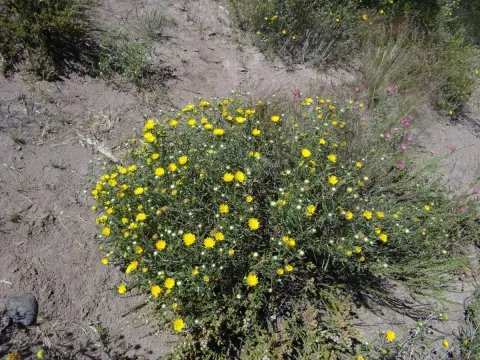
Grindelia brachystephana
Grindelia brachystephana
Grindelia brachystephana is a species of flowering plant in the daisy family (Asteraceae). It is primarily cultivated for its resinous properties, which are highly valued in the production of specialized pharmaceutical compounds.
What the section contains
Grindelia brachystephana
Sowing should be carried out in early spring when the soil temperature consistently reaches 10 degrees Celsius. The seeds are small and require precise placement to ensure optimal germination rates and field emergence.
The recommended sowing depth is approximately 1 to 2 centimeters. Because the seeds are sensitive to crusting, the soil surface should be kept loose and well-moistened during the initial stages of seedling development.
Optimal spacing typically involves rows set 45 to 60 centimeters apart. This configuration provides adequate room for the plant's root system to establish itself while allowing for mechanical cultivation between rows.
Seedlings usually emerge within two to three weeks after sowing. During this period, field sanitation is vital as young plants grow slowly and are easily outcompeted by aggressive weeds in the early stages.
This crop is naturally adapted to arid and semi-arid environments, making it highly drought-tolerant. It thrives in full sun and requires high light intensity to maximize the production of its characteristic resins.
The plant prefers well-drained, sandy or loamy soils. It performs poorly in heavy, waterlogged clay soils, which can lead to root system decay and significantly reduced biomass production.
Soil pH levels should ideally range between 6.5 and 7.5 for optimal nutrient uptake. The plant is notably tolerant to moderate soil salinity, making it a suitable candidate for crop diversification in saline-prone regions.
Climate requirements include warm and dry summers. High temperatures during the flowering stage are beneficial, as they correlate with a higher concentration of secondary metabolites in the flower heads.
Standard agronomic practices such as inter-row cultivation help aerate the soil and improve water infiltration. These practices are essential for maintaining plant health throughout the long vegetative season.
The economic value of Grindelia brachystephana is derived from the resins found on its flower heads and leaves. These resins contain diterpenoid compounds that provide significant therapeutic benefits.
Harvesting is conducted during the peak flowering stage, identified by the increased stickiness of the flower buds. At this stage, the concentration of active medicinal ingredients is at its highest level.
Yields are largely influenced by environmental conditions, particularly sunlight and moisture balance. Proper management can lead to sustained production over a multi-year growth cycle of the same plantation.
After harvesting, the plant material must be dried efficiently to prevent mold and the degradation of active chemical components. Drying is usually performed in thin layers under shade to maintain quality.
Sustainability in yield is achieved by rotating the crops and ensuring the soil fertility is managed through organic or mineral fertilization after the harvest period is completed.
Grindelia brachystephana has a natural resistance to many pests due to the presence of resinous and aromatic compounds. However, it remains susceptible to specific pathogens under poor environmental conditions.
Root rot is the most common threat, primarily caused by over-irrigation or stagnant water in the soil. Proper drainage is the most effective preventative measure against this physiological issue.
Aphids can occasionally infest flower heads, especially during seasons with low rainfall. Integrated pest management, including the use of biological control agents, is recommended to keep infestations at bay.
Invasive weeds represent a persistent threat to yield, as they compete for moisture and nutrients during the plant's early growth. Regular hoeing or herbicide application is necessary for successful stands.
- Maintaining proper drainage.
- Preventing soil compaction.
- Regular field monitoring.
- Managing weed pressure early.