
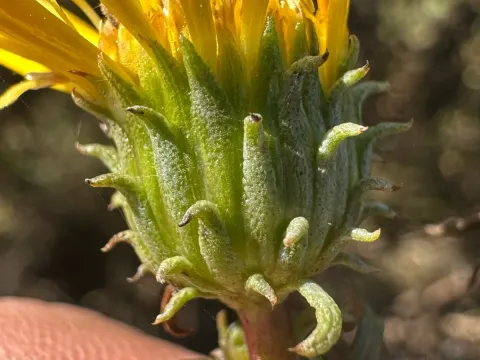
Grindelia hirsutula
Grindelia hirsutula
Grindelia hirsutula is typically propagated via seeds, with sowing recommended during early spring once soil temperatures have reached adequate levels for germination.
What the section contains
Grindelia hirsutula
Seeds may benefit from cold stratification to ensure uniform emergence across the field, especially in cooler climates or when sowing earlier than usual.
It is best to plant in rows with sufficient spacing to accommodate the plant's spread and facilitate weed control throughout the growing cycle.
The seeds should be sown at a shallow depth of approximately 1–2 centimeters, as they require a certain amount of light for optimal germination success.
Once established, the seedlings should be thinned to ensure proper air circulation and to prevent overcrowding, which can impact the quality of the harvest.
This species is highly adapted to sunny, open environments and performs best when exposed to direct sunlight for the majority of the day.
Well-drained soil is critical for the success of Grindelia hirsutula, as it is highly sensitive to waterlogged conditions that can cause root rot.
It thrives in soils that are neutral to slightly alkaline, preferring sandy or loamy textures over dense, clay-heavy soils that impede root penetration.
The plant demonstrates significant drought tolerance once established, making it a sustainable choice for regions with limited rainfall or water resources.
Optimal growth requires consistent warmth, though the plant is hardy enough to survive fluctuating temperatures typical of its native ranges.
The primary economic value of Grindelia hirsutula is derived from its high content of resins and terpenes, which are widely sought after in natural medicine.
Yield stability is improved through the implementation of controlled fertilization regimes that focus on providing adequate phosphorus and potassium.
Proper harvest management, timing, and post-harvest handling are essential to maximize the recovery of the valuable chemical constituents from the dried plant material.
Commercial plantations can achieve consistent annual yields if managed with appropriate irrigation and pest monitoring strategies throughout the season.
The market demand for plant-based resins continues to grow, providing a steady incentive for maintaining high-quality standards during cultivation and processing.
Powdery mildew is the most frequent fungal issue encountered, particularly during periods of high humidity or in environments with poor air movement.
Root rot, driven by excessive soil moisture or poor drainage, remains the primary threat to the longevity and productivity of the perennial stands.
Aphids and other sap-sucking insects can cause damage to the tender foliage and floral parts, requiring proactive monitoring and botanical-based pest management.
Occasional infestations of mites or leaf-feeding beetles can be managed through crop rotation and by maintaining healthy soil nutrition to boost plant vigor.
Early detection and prompt removal of infected plant material are key strategies to prevent the spread of pathogens across the entire production area.
Harvesting is best executed during the peak blooming stage when the resinous compounds on the flower heads are at their highest concentration.
Mechanical harvesting equipment should be set to target the upper flowering stems to avoid gathering excess non-essential foliage during the process.
Once harvested, the material must be moved quickly to drying facilities to preserve the volatile oils and active resins contained within the plant tissues.
Drying is performed at low temperatures to ensure that the sensitive phytochemicals are not degraded by excessive heat during the removal of moisture.
Final product storage involves packing the dried, cleaned material into moisture-proof containers to maintain its potency for pharmaceutical applications.