
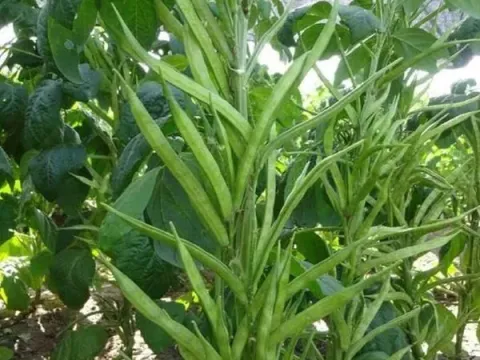
Guar
Cyanopsis
Guar is a warm-season annual legume, which means sowing times are strictly dictated by the arrival of stable, warm weather. The ideal time for planting is once soil temperatures reach at least 20-25 degrees Celsius, ensuring rapid and uniform germination.
What the section contains

Guar
In traditional growing regions, planting begins immediately after the start of the monsoon season or when reliable irrigation is provided. Early sowing allows the crop to maximize moisture availability and accumulate sufficient vegetative mass before the onset of extreme heat.
The seeding rate depends on soil fertility and the intended use of the crop, whether for seed production or green manure. A row-spacing of 30 to 45 centimeters is typically employed, providing enough space for each plant to develop a strong root system.
Seeds should be planted at a depth of 3 to 5 centimeters, depending on soil texture and moisture levels. Ensuring firm contact between the seed and moist soil is crucial for successful emergence, especially in drier environments.
Continuous cropping on the same land is not recommended due to the potential build-up of soil-borne pathogens. Cereal crops are considered excellent preceding plants for guar, as they help effectively reduce weed pressure in the field.
Cyanopsis is an exceptionally drought-tolerant crop, specifically adapted to semi-arid climatic conditions. It thrives during long dry spells by utilizing a deep taproot system that reaches significant depths to access subsurface moisture.
The crop prefers light, well-drained sandy or sandy-loam soils with a neutral to slightly alkaline pH. Excessive moisture and heavy, poorly draining soils are detrimental to root development and can quickly lead to crop failure or significant yield losses.
Optimal temperatures for vigorous growth range between 25 and 35 degrees Celsius. The crop is highly sensitive to frost, which can destroy seedlings or mature plants at any stage of development if temperatures drop unexpectedly.
The presence of specific nitrogen-fixing bacteria in the soil is essential for optimal crop performance. If guar is being introduced to a field for the first time, inoculation of seeds with the correct rhizobia strains is often a mandatory practice.
Nutrient requirements are generally moderate, though phosphorus application at the beginning of the growing season can significantly boost root development and accelerate maturity. Nitrogen fertilizers are often unnecessary due to the plant's natural nitrogen-fixing capabilities.
Guar seed yields under industrial conditions fluctuate significantly based on management intensity and environmental stressors. In rain-fed farming systems, yields may typically range between 500 and 1,000 kilograms per hectare.
With the application of consistent irrigation and advanced agronomic practices, seed yields can double or increase even further. The genetic potential of modern varieties allows for significantly higher productivity when the crop is properly maintained.
The primary commercial product, guar gum, is derived from the endosperm of the seed. The endosperm content represents roughly 30–35% of the total seed weight, which serves as a key indicator for determining economic returns.
Beyond seed production, the crop provides a substantial amount of high-protein green biomass. This biomass serves as an excellent livestock feed, being easily digestible and nutritious for ruminant animals.
Yield-limiting factors are most often associated with moisture stress during the flowering period or sudden temperature spikes. Effective weed control during the early stages of growth is critical to ensure high yields and optimal plant stands.
Fungal diseases, such as root rot and powdery mildew, represent the primary threat to guar crops. These diseases tend to proliferate rapidly when soil moisture levels are mismanaged or when poor drainage leads to waterlogging.
Pests like aphids and thrips are the most common insects to watch for; they damage plant tissues and can act as vectors for various viral diseases. Weekly scouting is necessary to monitor pest populations and prevent major outbreaks.
In some seasons, lepidopteran larvae may cause damage to leaves and developing pods. Chemical control, if required, should be targeted and based on economic damage thresholds to avoid unnecessary environmental impact.
Nematodes are a serious concern, particularly in fields where guar is grown consecutively without proper crop rotation. They can cause severe plant stunting and drastic reductions in overall field productivity.
Preventive measures include using high-quality treated seeds and maintaining spatial isolation between fields. Selecting resistant varieties adapted to local pathogen races remains the most effective long-term strategy for minimizing crop losses.
Harvesting should take place during physiological maturity when pods have turned dry and seeds have reached their characteristic hardness. Depending on the variety, this usually occurs between 100 and 120 days after sowing.
It is crucial to avoid leaving the crop in the field for too long after maturity, as dry pods may shatter, leading to significant seed losses. Seeds should be dried to a moisture content of 12–14% to ensure safe and long-term storage.
Combine harvesters are typically used, but the threshing mechanism must be adjusted carefully to prevent mechanical damage to the seeds. Controlling drum speed is a critical step in preserving seed quality and integrity.
Crop residues remaining in the field provide valuable organic matter, contributing to soil fertility and structure. Incorporating these residues back into the soil helps build nitrogen levels and improves overall soil health for future crops.
Post-harvest handling involves cleaning the seeds of any impurities and drying them on threshing floors if needed. Proper storage in clean, well-ventilated warehouse facilities is essential to maintain the functional properties of the guar gum endosperm.