
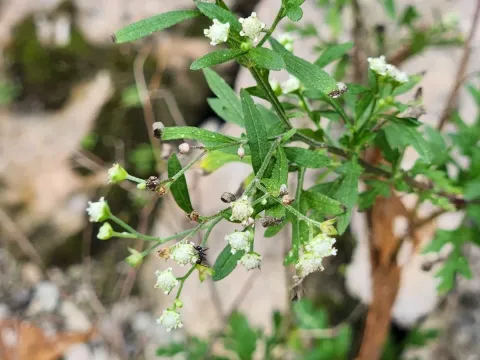
Guayule
Parthenium
Guayule is a perennial semi-shrub, which means that plantations are established to last for several years. The ideal time for sowing seeds is early spring, once the risk of frost has passed and the soil has warmed to a temperature of 18–20 degrees Celsius.
What the section contains


Guayule
Seeds of guayule require stratification or specific growth regulator treatments to overcome natural dormancy and ensure uniform germination. Planting depth should be shallow, generally between 0.5 and 1 cm, in well-prepared, fine-textured soil.
In large-scale agricultural production, the transplanting method is preferred over direct seeding. Seedlings are typically raised in nurseries for 8–10 weeks before being transplanted into the field, which significantly increases establishment rates.
Planting patterns are designed to allow for mechanical weeding and access for agricultural machinery. Adequate spacing between rows is essential to minimize competition for moisture and nutrients during the plant's early development stages.
Ensuring consistent irrigation during the first year is critical for the development of a robust root system. Once established, guayule displays excellent drought tolerance, allowing it to thrive in arid climates where other crops would fail.
Guayule, scientifically known as Parthenium argentatum, belongs to the Asteraceae family. It is native to the arid regions of Mexico and the Southwestern United States, making it uniquely adapted to environments with limited water and high temperatures.
The plant requires high levels of solar radiation to facilitate photosynthesis and drive the synthesis of natural rubber within its tissues. Well-drained sandy or sandy-loam soils are ideal, as the plant is highly sensitive to waterlogging.
The crop thrives in a wide range of soil pH levels, from neutral to slightly alkaline. One of the standout features of guayule is its tolerance to soil salinity, which makes it a viable candidate for cultivation in regions plagued by salt accumulation.
Agronomic management focuses primarily on weed control during the seedling stage. Mechanical cultivation and the use of approved herbicides are common practices to prevent competition from invasive grasses and shrubs.
Fertilization should be managed carefully. Excessive nitrogen application can promote lush vegetative growth at the expense of rubber accumulation. Phosphorous and potassium supplements are generally more beneficial for long-term plant health.
The primary economic product of guayule is the natural rubber found in the bark of its stems and roots. The yield typically increases with the age of the plantation, with the optimal harvest window occurring between 3 and 5 years of growth.
The rubber content generally ranges from 5 to 15 percent of the dry weight, though modern breeding programs have developed varieties capable of producing higher yields. Yield optimization remains a primary focus of agronomic research.
Agricultural practices, such as reducing irrigation towards the end of the growth cycle, act as stress factors that stimulate the plant to produce more rubber. This natural response is a key component of high-yield farming strategies.
The remaining biomass after rubber extraction serves as a valuable byproduct. It can be used for bioenergy production or as a structural filler in various industrial applications, contributing to a circular economy model.
Modern extraction technologies continue to evolve, moving away from harsh solvents toward environmentally friendly mechanical and enzymatic methods. These innovations improve the purity and quality of the rubber obtained from the harvested biomass.
Guayule is inherently hardy but remains susceptible to certain pathogens if environmental conditions are mismanaged. Root rot, caused by poor drainage, is the most common disease threat during the early stages of plant development.
Insect pests, including grasshoppers and certain types of weevils, can cause damage by feeding on foliage. Regular scouting and integrated pest management are necessary to protect the plant from significant infestation during dry spells.
Nematodes can affect plant vigor if soil health is not maintained. Crop rotation with non-host species is strongly recommended to disrupt the life cycle of these underground pests and ensure the longevity of the plantation.
Fungal issues, such as gray mold, may arise in the flowers if prolonged moisture occurs during the flowering season. Maintaining appropriate plant density helps improve airflow and reduces the risk of such infections.
Chemical intervention should be used judiciously to avoid disrupting the balance of beneficial insects in the field. Preserving local biodiversity is essential for natural pest suppression in large guayule plantations.
Harvesting guayule involves the total removal of the plant, including both the aerial stems and the roots. Specialized agricultural equipment, such as forage harvesters or customized cutters, is used to lift and chip the biomass in a single pass.
The optimal harvest time is during the winter months, when the plant enters a period of metabolic dormancy. During this phase, rubber concentration within the tissues is at its peak, ensuring maximum recovery of the valuable product.
Post-harvest handling requires prompt drying of the chipped biomass to prevent microbial degradation and oxidation of the rubber. Proper storage conditions are essential to maintain the quality of the raw material before processing.
Transporting the material to extraction facilities requires logistical efficiency. Minimizing the time between harvest and processing prevents the loss of rubber quality and ensures that the raw material remains suitable for industrial use.
At the factory, the processed chips are subjected to a series of mechanical and physical processes to isolate the rubber from the woody fibers. This high-quality natural rubber is then ready for various manufacturing processes, such as tire production.