
Green santolina
Santolina virens
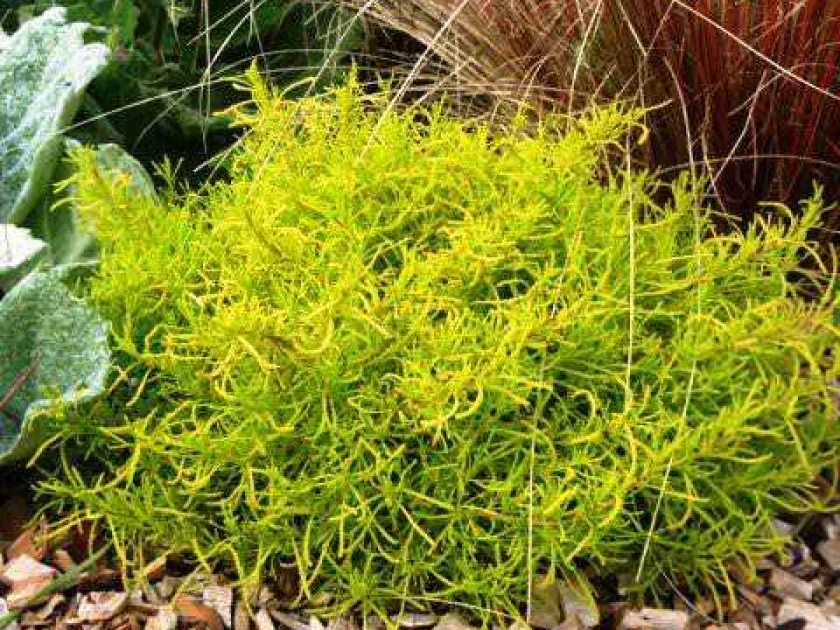
Description
Sowing dates
Green santolina (Santolina virens) belongs to the Asteraceae family and is a popular evergreen subshrub. It is most commonly propagated via cuttings, as seed germination can be slow and irregular.
For propagation, take semi-ripe cuttings in late spring or early summer. Place them in a well-draining potting mix and keep them in a bright, warm location until roots establish.
If starting from seed, sow in late winter in seed trays using light, sandy soil. Light is crucial for germination, so seeds should be barely covered with substrate.
Seedlings should be hardened off before being transplanted into their permanent outdoor location. Space plants approximately 30-40 cm apart to ensure good airflow.
Establishment period requires consistent moderate watering, but once the plant is well-rooted, it becomes significantly more drought-tolerant.
Growing requirements
This species thrives in full sun, which is necessary to maintain its compact habit and vibrant green foliage. Insufficient light leads to leggy stems and poor health.
Soil requirements are strict regarding drainage. It grows best in gritty, sandy, or rocky soil with a neutral to slightly alkaline pH. Wet, heavy clay soils must be improved or avoided.
Santolina virens is adapted to Mediterranean climates, tolerating heat and dry spells well. In colder zones, it needs winter protection to prevent damage from freezing moisture.
Pruning is a fundamental part of its care. It should be pruned back annually after flowering to prevent the plant from becoming woody and sparse at the base.
Avoid excessive fertilization. Rich soils lead to rapid growth that is often weak, making the plant less aromatic and more susceptible to winter injury.
Main diseases and pests
The most significant threat is root rot caused by stagnant water. Ensuring perfect soil drainage is the primary defense against this common fungal issue.
Powdery mildew can occur in humid conditions or where air circulation is restricted. Thinning out the plants can help alleviate this problem significantly.
Aphids are occasional pests, particularly on the soft, new growth during the spring months. They can usually be managed with organic insecticidal soaps.
Spider mites may affect plants grown in dry, hot greenhouse conditions. Increasing ambient humidity or spraying leaves with water can discourage their development.
Overall, santolina is a robust plant. Most health issues arise from improper watering or lack of sunlight rather than pests or diseases.
Harvesting
Green santolina is widely utilized in landscape design for its deep green color and uniform texture. It is a staple for edging, rock gardens, and low-maintenance topiary.
Harvesting for culinary or aromatic use occurs when the plant is in full bloom. Gather flowering tops and fresh leaves for drying in a shaded, ventilated environment.
The plant is highly valued for its natural insect-repellent properties. Planting it near paths or vegetable patches can help reduce the presence of unwanted garden pests.
Essential oils extracted from the plant have historical applications in traditional medicine and are still used in the fragrance industry for their fresh, herbal notes.
Dried flowers and leaves maintain their scent for a long period, making them excellent components for sachets and herbal potpourris.