
Grindelia perennis
Grindelia perennis
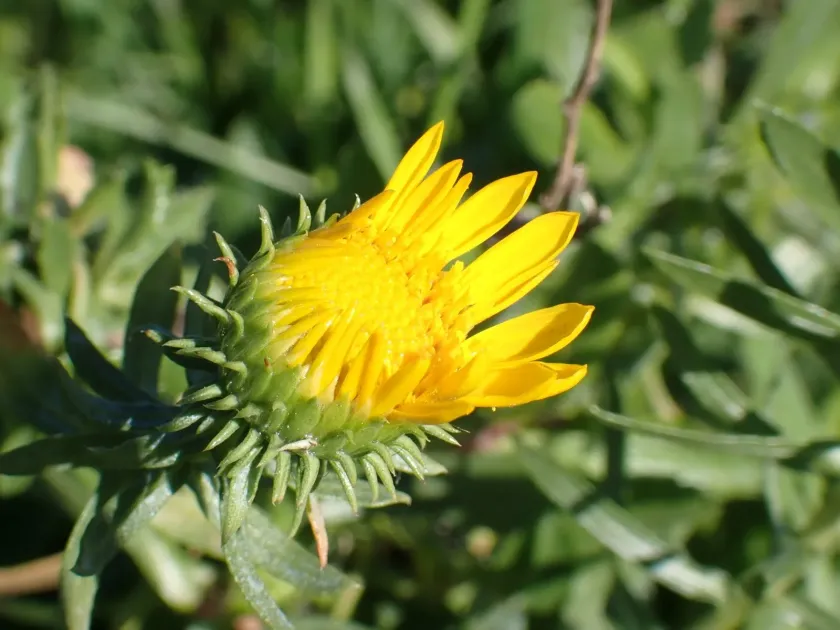
Description
Sowing dates
Grindelia perennis is typically established through direct seeding into well-prepared soil during the early spring season once the frost risk has passed.
The seeds are small and should be sown at a shallow depth of approximately 0.5 to 1 centimeter, ensuring optimal contact with the soil for proper germination.
For large-scale cultivation, precision seed drills are recommended to maintain consistent spacing and density, which helps in managing plant competition.
Greenhouse seedling production is a viable alternative for regions with shorter growing seasons, allowing for earlier field transplantation once temperatures stabilize.
Consistent soil moisture must be maintained during the first few weeks after sowing to ensure high germination rates and uniform plant development.
Growing requirements
As a member of the Asteraceae family, Grindelia perennis thrives in open, sunny environments and is highly adapted to semi-arid climate conditions.
The plant requires well-drained, sandy or gravelly soil types to prevent waterlogging, which is detrimental to its root system and overall health.
It demonstrates excellent tolerance to high temperatures and low atmospheric humidity, making it an ideal candidate for dry-land agricultural systems.
Soil pH levels should generally range from neutral to slightly alkaline, and excessive fertilization is usually unnecessary as the plant is adapted to lower fertility levels.
Proper airflow between plants is essential to prevent the accumulation of humidity, which can lead to fungal issues in more humid climates.
Yield
The harvestable yield of Grindelia perennis consists primarily of the flowering tops and upper leaves, which are rich in resins and medicinal compounds.
With proper crop management, including weed control and minimal irrigation during extreme drought, a stable annual yield can be maintained over several years.
The yield of dried botanical material typically ranges from 1.5 to 2.5 metric tons per hectare, depending on local soil quality and climatic factors.
Yield consistency is achieved by harvesting at the optimal phenological stage, avoiding excessive lignification of the stems which reduces product quality.
Techniques such as drip irrigation can significantly increase the total biomass production in very arid regions without compromising the resin quality.
Main diseases and pests
Root rot and crown diseases are the primary threats when the plant is grown in heavy or poorly drained soils that retain excess moisture.
Common pests include aphids and various beetle species that can cause physical damage to the leaves and developing flower buds during the peak growing season.
Fungal pathogens such as powdery mildew can affect the foliage if plant density is too high, leading to reduced photosynthetic efficiency.
Integrated pest management strategies are recommended, focusing on early detection and the use of botanical or biological controls to protect the crop.
Site selection remains the most effective tool for mitigating threats, as avoiding heavy, damp soils naturally reduces the pressure from soil-borne pathogens.
Harvesting
Harvesting is critical and should occur during the full bloom phase, which is when the concentration of beneficial resins is at its seasonal peak.
Mechanical harvesting equipment, such as sickle-bar mowers, is used to cut the flowering tops at the desired height to maximize the yield of high-quality plant parts.
Post-harvest processing requires immediate drying in a controlled environment to preserve the volatile components and prevent fermentation or mold growth.
The drying temperature must be kept moderate, ideally between 35 and 45 degrees Celsius, to ensure the chemical integrity of the dried herb product.
Proper storage in cool, dry conditions follows the drying process, ensuring the raw material remains suitable for pharmaceutical or industrial extraction.