
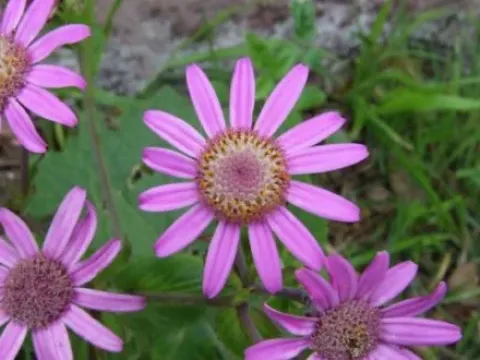
Florist's cineraria
Senecio hybrids
Sowing of Florist's cineraria seeds is typically performed during the summer months, from June to August, to ensure a beautiful blooming cycle during the cooler winter or spring.
What the section contains
Florist's cineraria
The seeds are exceptionally small and should be sown on the surface of the growing medium, requiring only light pressure to ensure contact rather than deep covering.
Germination requires a consistent temperature of about 18–20 degrees Celsius and high humidity levels, often maintained by covering the trays with glass or plastic.
Seedlings should be pricked out into individual pots once they reach the two-leaf stage, allowing sufficient space for robust root development.
Artificial lighting is essential for young plants in regions with short winter days to maintain a photoperiod of at least 12–14 hours for healthy development.
Senecio hybrids belong to the Asteraceae family and thrive in cool environments, as high temperatures quickly lead to plant exhaustion and foliage wilting.
The ideal temperature range for maintaining vigorous growth and prolonging the flowering period is between 10 and 15 degrees Celsius.
The soil must be well-draining, nutrient-rich, and peat-based, providing an slightly acidic to neutral pH level for optimal nutrient uptake.
Regular watering is necessary to keep the soil consistently moist, but water stagnation must be strictly avoided to prevent root damage.
Diffuse sunlight is preferred for the best plant health, as direct intense sun exposure can easily scorch the broad leaves and damage the flowers.
Aphids are the most common pest, often colonizing the underside of leaves and soft stems, which can deform the foliage and weaken the plant.
Powdery mildew is a frequent fungal threat in greenhouses caused by stagnant air and high humidity, appearing as a white dusty coating on the leaves.
Root rot, driven by overwatering and lack of soil aeration, is a major cause of plant loss in commercial production and domestic cultivation.
Spider mites can also become a problem in dry, warm conditions, necessitating regular checks and timely treatment with acaricides.
Effective hygiene practices, such as removing spent flowers and maintaining good air circulation, are the most reliable ways to manage and prevent disease.