
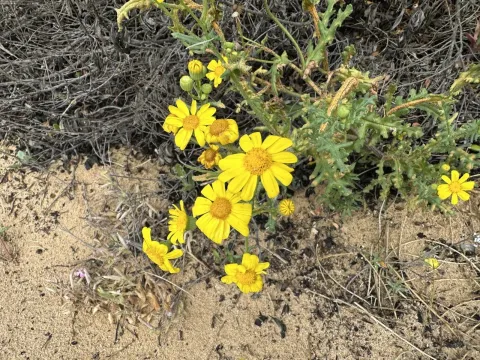
Gallic ragwort
Senecio gallicus
Gallic ragwort is an annual herbaceous plant whose life cycle is closely linked to climatic conditions. Germination typically occurs in the autumn or early spring when soil moisture is sufficient, allowing the plant to establish itself quickly in open or disturbed areas.
What the section contains
Gallic ragwort
In agricultural settings, the seeds of Senecio gallicus are known for their high germination energy. Agronomists often observe rapid emergence following primary tillage, as soil disturbance provides the seeds with the necessary exposure to light and oxygen to break dormancy.
The flowering period is extended, which presents a significant challenge for field management. If spring seedlings are not controlled, they can progress to the flowering stage by mid-summer, contributing to a substantial soil seed bank that complicates future cultivation efforts.
Seed dispersal is facilitated by wind and agricultural machinery, making the timing of intervention critical. Effective weed management requires mechanical control or targeted herbicide application before the plants enter the budding phase to prevent seed maturation.
Systematic monitoring is essential to ensure that Gallic ragwort populations do not become established in the crop canopy. Reducing the seed bank through consistent tillage and cover cropping can significantly mitigate the weed's impact on agricultural productivity over time.
This species thrives in open, sunny environments with well-drained soil. Gallic ragwort is particularly adapted to sandy or loamy soils, which are common in its native range across the Mediterranean and Western Europe, where it frequently colonizes disturbed terrain.
The plant shows moderate requirements for soil fertility and prefers neutral to slightly alkaline pH levels. It is recognized for its high ecological plasticity, allowing it to withstand periods of drought and adapt to varying environmental conditions within its growing range.
Climatic requirements are typical for a temperate-warm climate species. The optimal temperature for vigorous vegetative growth ranges between +15 and +25 degrees Celsius, although the plant displays a remarkable ability to survive minor temperature fluctuations in early spring.
As a ruderal species, Gallic ragwort is often found colonizing field margins, roadsides, and uncultivated patches. In intensive farming systems, it acts as a competitor for water and essential mineral nutrients, potentially reducing the vigor of nearby economic crops.
Maintaining proper soil structure and managing vegetation on field borders are effective strategies to limit the spread of Gallic ragwort. Preventing soil compaction also helps reduce the competitive advantage that this weed typically holds over desirable vegetation.
Gallic ragwort can serve as an alternative host for various viral diseases that affect field crops. The presence of this weed in or around agricultural land increases the risk of infection, necessitating vigilance to prevent disease outbreaks in adjacent vegetable or grain fields.
Common pests associated with this plant include aphids and leaf beetles. These insects can migrate from the weed to crop plants, acting as vectors for diseases and causing direct physical damage that reduces both the quality and the overall yield of the harvest.
Fungal pathogens such as powdery mildew and rust species often infect the foliage of Gallic ragwort under high humidity conditions. These infected plants then act as inoculum sources, spreading spores that can negatively impact the health of surrounding agricultural crops.
The primary threat posed by Senecio gallicus is resource competition. By rapidly absorbing nitrogen and water, the plant limits the availability of these essential inputs for younger crops, resulting in stunted development and lower yields during the crucial vegetative stage.
- Integrated pest management reduces the risk of viral transmission.
- Sanitation of equipment prevents seed movement between fields.
- Regular field border monitoring is key to preventing large-scale infestations.