

Biofungicide Mikosan «B» and «N», 3% w/v
Mykoton-Aglicon, LLC
Fungicides
0
0
9 offers
3.56 €per 1 l
Buy

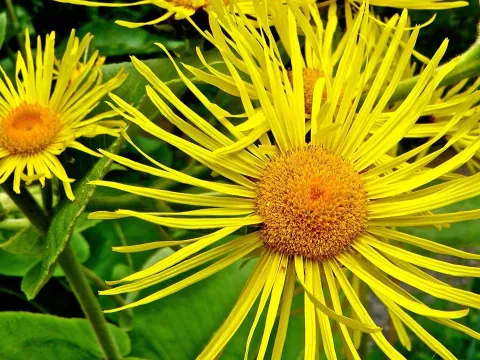
Inula
Sowing of elecampane (Inula helenium) is typically performed using seeds sown directly into open soil. The most favorable time for planting is either during the late autumn (October-November) or early spring, as soon as the soil warms up to 5-8 degrees Celsius.
For spring sowing, seeds require stratification for about a month to improve germination rates. Seeds are planted in rows at a depth of no more than 1–2 centimeters, maintaining row spacing of up to 60 centimeters.
Elecampane sprouts emerge slowly and require careful soil moisture control. During the first year, the crop develops a powerful rosette of basal leaves and establishes a deep, robust root system.
For large-scale industrial plantations, a seedling method is often preferred. This approach ensures more uniform germination and allows for more efficient use of land during the initial months of the growing season.
Once two pairs of true leaves appear, seedlings should be thinned. Maintaining a distance of 30–40 centimeters between plants in a row ensures that each root system has sufficient room for healthy expansion.
Inula belongs to the Asteraceae family and is a perennial herbaceous plant. The crop is known for its high winter hardiness and its ability to adapt to diverse climatic conditions in the temperate zone.
The plant prefers well-lit areas, although it can tolerate partial shade during the morning hours. For optimal root development, the crop requires adequate soil moisture, especially during the active growth phase.
Elecampane is relatively undemanding regarding soil types, but the best yields are achieved on fertile loamy or sandy loam soils. Growers should avoid areas with high groundwater levels or water stagnation to prevent root rot.
Regular weeding and cultivation between rows are mandatory agronomic practices. Incorporating organic fertilizers before tillage significantly boosts the overall mass and quality of the medicinal roots.
The plant responds well to phosphorus and potassium-based mineral fertilizers. A neutral or slightly acidic soil pH is ideal, as growth may significantly decelerate in highly acidic soil conditions.
The yield of elecampane is measured by the mass of dried rootstocks, which constitute the primary product of economic value. With proper agronomic care, one hectare can produce up to 4-6 tons of high-quality material.
Maximum productivity is achieved in the second or third year of the plant's life. By this time, the roots accumulate the highest concentration of inulin and essential oils, which are critical for its medicinal applications.
On intensive industrial plantations, yields can be even higher when using high-quality planting material. It is essential to manage plant density effectively to avoid competition for nutrients and water.
Yield indicators are heavily dependent on regional climate features and the availability of precipitation during the summer months. Consistent irrigation during dry years can increase marketable output by 20–30%.
After harvesting, roots are cleaned, washed, and dried at temperatures not exceeding 40 degrees Celsius. The yield of dried raw material is typically 25-30% of the fresh root weight.
Inula generally has a strong immune system, but poor cultivation practices can lead to fungal infections. The most common issue is powdery mildew, which manifests as a white coating on the leaves.
Root rot is a major threat in fields with excessive soil moisture. To prevent this, crop rotation must be strictly followed, ensuring the plant does not return to the same plot for at least 5–7 years.
Among pests, various species of aphids and true bugs cause the most significant damage by feeding on young foliage and stems. In cases of severe infestation, biological insecticides are recommended.
In some seasons, wireworms may damage the root system. Effective prevention includes proper soil preparation and deep autumn plowing to disrupt the life cycle of these soil-dwelling pests.
Continuous monitoring of the plantation allows for early detection of infection hotspots. Removing affected plants and sanitizing tools are crucial steps in preventing the spread of diseases across the entire crop area.
The harvest of Inula takes place in the autumn of the second year of vegetation, just as the aerial part of the plant begins to wither. This timing ensures the highest concentration of active compounds in the roots.
Harvesting is performed using mechanical plows or root diggers set to a depth of 30–40 centimeters. It is important to extract the roots carefully to minimize mechanical damage and breakage.
Freshly harvested roots are immediately cleared of soil and residual plant material. This simplifies the subsequent washing and processing steps before drying begins.
Washing is performed using high-pressure water in specialized root-washing machines. Cleanliness of the final product is a strict requirement for pharmaceutical standards.
After washing, roots are cut into segments of 10-15 centimeters and placed in drying chambers. Precise temperature control during the drying process is essential to preserve the medicinal properties and essential oil content.

