
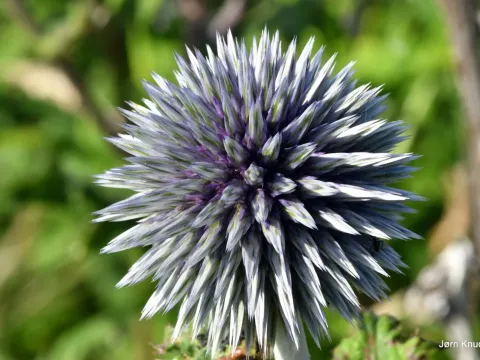
Echinops bannaticus
Echinops bannaticus
Echinops bannaticus, commonly known as the blue globe thistle, is a perennial flowering plant in the Asteraceae family. It is typically propagated by seeds sown either in late autumn or early spring.
What the section contains
Echinops bannaticus
Sowing in autumn allows seeds to undergo natural cold stratification, which significantly improves germination uniformity compared to spring sowing efforts.
The seeds should be sown at a depth of approximately 2-3 centimeters in well-drained soil. Because the plant develops a robust root system, adequate spacing is essential for plant health.
A row spacing of about 60-70 centimeters is recommended to ensure proper aeration and light penetration for the developing rosettes in the first season.
Thinning is necessary once seedlings have established, leaving about 40 centimeters between individual plants to accommodate their mature size.
This species is highly adaptable and thrives in sunny locations with well-draining soil. It is remarkably drought-tolerant once it has fully established its deep taproot system.
Echinops bannaticus prefers soil with a neutral to slightly alkaline pH. It performs poorly in heavy, waterlogged clay soils, which can lead to root rot during the dormant winter months.
The plant is extremely hardy and can withstand freezing winter temperatures without requiring any additional protective covering, making it ideal for temperate climates.
Exposure to full sun is critical, as it promotes the development of vibrant blue flower heads and increases nectar production, which is essential for attracting pollinators.
During the first year, providing moderate moisture during dry spells will encourage vigorous vegetative growth, though mature plants require minimal irrigation.
Echinops bannaticus is highly valued as a premier honey plant, known for its ability to produce substantial amounts of high-quality nectar throughout the summer season.
In optimal conditions, honey production from this crop can reach several hundred kilograms per hectare, making it a critical asset for commercial apiaries.
The plant also contains echinopsine, an alkaloid with potential applications in the pharmaceutical industry, particularly for stimulating the nervous system.
Seed yield is an important commercial metric, often reaching significant quantities when managed properly for seed production in specialized nursery environments.
Beyond apiculture and medicine, the plant serves a strong market as a dried flower product in the floral industry due to its long-lasting, unique globular shape.
The plant is generally robust, but high humidity levels can sometimes trigger powdery mildew, which affects the leaves and reduces the plant's overall vigor.
Pests such as wireworms and aphids are the most common threats to young plants, potentially causing stunted growth if not addressed during the early stages.
- Powdery mildew: Prevented by ensuring adequate spacing and air circulation.
- Aphids: Can be managed with biological control agents or insecticidal soaps.
- Slugs: May cause minor damage to new foliage in the spring.
Maintaining a weed-free area around the base of the plants helps prevent moisture accumulation and reduces the breeding grounds for various soil-borne pests.
The use of integrated pest management practices is recommended to ensure the safety of bees and other pollinators that frequent the flower heads.
Harvesting for seed production should occur when the flower heads have transitioned from a bright blue color to a dry, brownish-grey tone, indicating maturity.
Because the plant features sharp, spiky flower heads, mechanical harvesting is preferred over manual methods to avoid injury and increase overall efficiency.
Threshing is best performed shortly after harvest to separate the seeds from the pappus, which often clings to the plant material after drying.
The seeds must be cleaned using seed cleaners to remove debris and then stored in a cool, dry place to maintain high germination viability for the following season.
Cleaned plant waste can be composted, provided the plant material has not been subjected to chemical pesticides that might harm the long-term fertility of the soil.