
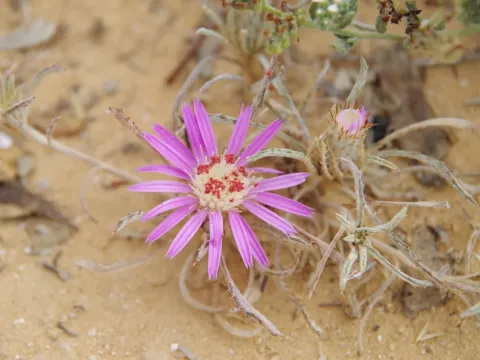
Atractylis prolifera
Atractylis prolifera
Atractylis prolifera is a perennial herbaceous plant belonging to the Asteraceae family. It is recognized for its botanical uniqueness and specific adaptation to Mediterranean-type ecosystems.
What the section contains
Atractylis prolifera
The plant originates from rocky and arid habitats, thriving in regions with high solar radiation and low annual precipitation. Its native range is primarily associated with limestone-rich terrains where other crops often struggle.
For successful agricultural production, growers should ensure well-draining, stony, or sandy soil. The plant has a low tolerance for heavy, compacted soils that retain moisture for long periods, which often causes root decay.
Climatic requirements focus on warmth and good airflow. Excessive humidity combined with low temperatures is the most significant environmental risk, requiring sheltered or well-ventilated fields during wet seasons.
Agricultural management should prioritize minimal interference with the natural soil structure. Fertilizer application should be carefully managed, as the species is accustomed to nutrient-poor soils and over-fertilization can reduce its vigor.
Fungal diseases, particularly those affecting the root system, represent the primary threat to Atractylis prolifera. Maintaining soil aeration is the most effective cultural practice to prevent the onset of these pathogens.
Insect pests such as aphids and spider mites can infest the foliage, particularly during hot and dry spells when the plant's metabolic activity is intense. These pests can stunt growth if left untreated.
Weed competition is a critical factor during the seedling stage. Young plants are relatively slow-growing and require hand-weeding or light mechanical weeding to ensure they are not shaded out by invasive weeds.
Pest management programs should prioritize the use of integrated pest management (IPM) techniques. This includes the use of predatory insects or selective biopesticides to avoid harming the plant's potential end-use quality.
Environmental stress, such as unseasonal frost or prolonged saturation, makes the plant more susceptible to opportunistic pathogens. Monitoring the health of the base of the stem is essential for early disease detection.