
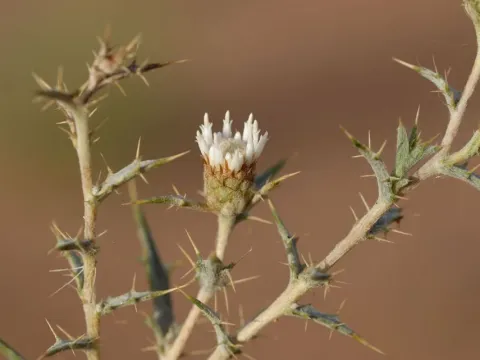
Atractylis serratuloides
Atractylis serratuloides
Atractylis serratuloides propagates primarily via seeds, with germination cycles often influenced by the specific climatic conditions of its native arid regions. In agricultural settings, pre-sowing seed stratification is recommended to ensure uniform field emergence.
What the section contains
Atractylis serratuloides
The optimal planting time is early spring, once soil temperatures stabilize, although late-autumn sowing is feasible in regions with mild winters. Seeds should be sown shallowly to allow proper oxygen exchange during the germination process.
Selecting a location with high solar exposure is critical, as this species is a sun-loving plant that requires maximum light to develop its characteristic secondary metabolites. Overshadowing or high planting density must be strictly avoided.
Maintaining proper row spacing, typically between 40 and 60 centimeters, is essential for effective mechanical weeding and ensuring airflow between plants, which reduces the risk of fungal infections.
During the first phase of growth, the crop develops slowly, making it highly susceptible to competition from invasive weeds. Frequent mechanical cultivation between rows is necessary until the plants reach the rosette stage and establish dominance.
Belonging to the Asteraceae family, Atractylis serratuloides is a xerophytic plant that thrives in dry, well-drained soil conditions. It is particularly well-adapted to sandy or light loam soils with excellent aeration properties.
The plant demonstrates significant tolerance to high ambient temperatures and extended drought periods. A deep root system allows it to access deeper soil moisture, minimizing the need for frequent irrigation during the vegetative stage.
Soil pH should remain in the neutral to slightly alkaline range. In cases of acidic soils, agricultural lime application is a standard practice to improve the chemical environment and enhance nutrient uptake for the crop.
Routine moisture management involves light cultivation to prevent surface crusting. Excessive moisture, especially stagnation, must be strictly avoided as it can cause physiological distress and promote pathogenic development.
Fertilization regimes should be balanced, focusing on mineral content rather than excessive nitrogen. High nitrogen levels can cause rapid, succulent growth that is more prone to lodging and susceptibility to pests.
Crop yield for Atractylis serratuloides is determined by planting density and the success of early-stage establishment. In well-managed fields, yields of raw biomass can reach 5 to 8 tons per hectare, depending on local fertility.
The primary economic output is the root system, which contains specialized compounds valued in natural product industries. The dry matter yield is generally around 20–25% of the total fresh weight collected during harvest.
Peak biomass and phytochemical accumulation are typically achieved in the second and third years of cultivation. Continuous production on the same site for over four years is not recommended due to soil nutrient depletion.
Standardizing the harvest time is crucial for economic success, as the chemical profile fluctuates throughout the growth cycle. Monitoring phenological phases ensures that the harvest coincides with the peak concentration of active compounds.
Commercial yields are often optimized through drip irrigation systems, which deliver moisture directly to the root zone, ensuring consistency even in extreme heat and preventing soil nutrient leaching.
The main threats to Atractylis serratuloides include various fungal pathogens that thrive in overly moist conditions. Root rot is the most common concern, usually associated with inadequate soil drainage.
Leaf-feeding insects and specific aphids can damage vegetative tissue, leading to a reduction in photosynthetic capacity. Regular scouting programs are recommended to detect and manage these pests before economic thresholds are reached.
Prevention focuses on the implementation of a proper crop rotation system, which breaks the lifecycle of soil-borne pathogens. Using certified, clean seed lots significantly reduces the risk of introducing diseases to a new plantation.
Integrated Pest Management (IPM) strategies, including the use of biological control agents, are preferred over synthetic pesticides to preserve the quality of the medicinal harvest. Chemical use must comply with strict safety intervals.
Small mammals and rodents may occasionally pose a threat by feeding on the storage roots. Physical barriers or trapping are effective measures to protect the crop in areas where these populations are high.
Harvesting usually occurs during the flowering phase or just as the plant enters dormancy, depending on whether the roots or aerial parts are the primary targets. Dry weather during harvest is essential for post-harvest longevity.
Mechanical root diggers are employed to extract the roots, which are then cleaned to remove soil and impurities. A thorough cleaning process is vital to ensure the final product meets market quality standards.
Post-harvest processing involves washing and immediate drying. Drying should be done in well-ventilated areas or controlled industrial driers at temperatures not exceeding 50 degrees Celsius to prevent chemical degradation.
The dried product should be stored in moisture-proof containers in a cool, dark environment to maintain its potency. Proper storage conditions allow the material to remain stable for up to two years.
Quality control during storage includes monitoring for moisture content, which should be kept at minimal levels to prevent fungal regrowth and the breakdown of volatile active ingredients over time.