
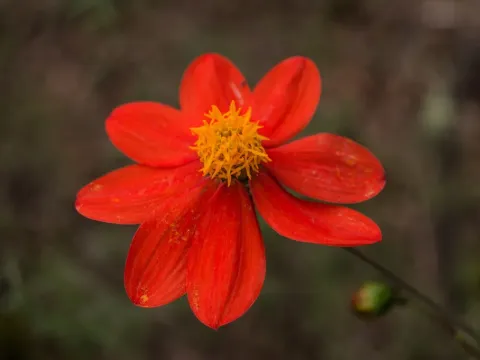
Dahlia
Dahlia
Dahlia is a genus of bushy, tuberous, herbaceous perennial plants in the Asteraceae family, native to Mexico and Central America.
What the section contains


Dahlia
Commercial and home cultivation is primarily based on vegetative propagation, where established tuber clumps are divided and replanted.
Planting in open fields should occur after the final spring frost, ensuring that soil temperatures have consistently reached at least 10–12°C.
Seeds are used mainly for breeding new cultivars or rapid production of annual bedding varieties, requiring a greenhouse start in early spring.
Proper spacing is crucial for plant health, ranging from 40 cm for dwarf varieties up to 100 cm for giant flowering types to ensure air circulation.
Dahlias thrive in full sun exposure and require at least six to eight hours of direct sunlight per day to produce high-quality blooms.
The ideal soil is well-drained, fertile, and slightly acidic; heavy clay soils should be amended with organic matter to prevent tuber rot.
Regular watering is essential, especially during the peak of summer, to keep the root zone consistently moist but never waterlogged.
Application of balanced fertilizers is recommended throughout the growth cycle, with a focus on phosphorus and potassium to enhance flower production.
Because they are tender perennials, they cannot survive freezing winters in temperate regions and must be lifted for winter storage.
Common pests that affect dahlias include aphids, spider mites, and tarnished plant bugs, which can stunt growth and spread viral diseases.
Gastropods like slugs and snails are particularly problematic for young shoots during the early stages of growth in humid environments.
Fungal diseases, notably powdery mildew and Botrytis (gray mold), occur frequently in poorly ventilated gardens with high humidity.
Viruses are a major concern in dahlia crops, causing mottling, ring spots, and stunted growth; infected plants should be removed and destroyed.
Good agricultural practices such as avoiding overhead watering and maintaining plant spacing significantly reduce the risk of infestation.
Harvesting of tubers begins in late autumn once the foliage has been killed back by the first significant frost of the season.
The stems should be cut back to about 10–15 cm before carefully lifting the tuber clusters from the ground using a garden fork.
After cleaning off excess soil, tubers must be air-dried in a sheltered, well-ventilated spot to cure before being moved into storage.
Storage conditions must remain stable, with a temperature range of 3–6°C and high humidity to prevent the tubers from shriveling or drying out.
Storage media like dry peat moss, sand, or vermiculite are often used to pack tubers and provide a buffer against moisture fluctuations.