
Dahlia
Dahlia hybrids
Description
Sowing dates
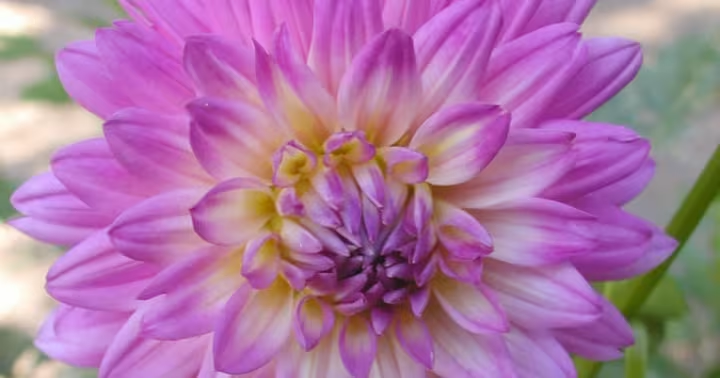
Dahlias (Dahlia hybrids) are perennial tuberous plants belonging to the Asteraceae family. Native to the mountainous regions of Mexico and Central America, they have been developed into thousands of cultivars known for their varied flower shapes and colors.
In most regions with cold winters, dahlias are treated as tender perennials or annuals. The planting of tubers into open ground should only occur after the risk of spring frost has completely passed and the soil has warmed up significantly.
Gardeners often start tubers indoors in pots about four to six weeks before the last expected frost date. This practice ensures earlier blooming and allows for a longer display of flowers during the summer and autumn seasons.
When planting, tubers should be placed horizontally or vertically with the eye facing up, at a depth of about 10–15 cm. The soil must be well-prepared with organic matter to ensure adequate drainage and nutrient availability.
Proper spacing is crucial for airflow and disease prevention. Depending on the variety, plants should be spaced 50 to 100 cm apart. Taller cultivars require sturdy support structures to prevent breakage during strong winds or heavy rain.
Growing requirements
Dahlias thrive in full sun, requiring at least six to eight hours of direct sunlight daily for optimal flower production. Locations with partial shade may result in weak, leggy stems and poor blooming performance.
The ideal soil is fertile, humus-rich, and sandy-loam with excellent drainage. Dahlias are highly sensitive to "wet feet"; if water sits around the tubers, they will quickly rot, leading to plant collapse.
Watering needs are consistent throughout the growing season. While the soil should be kept moist, it should never be waterlogged. During hot, dry spells, deep watering once or twice a week is more beneficial than daily shallow sprinklings.
Fertilization should focus on potassium and phosphorus once the buds begin to form. Avoid excessive nitrogen after the plant is established, as this encourages lush foliage growth at the expense of flower development.
Mulching is recommended to suppress weeds and maintain stable soil moisture levels. Removing faded flowers (deadheading) is essential to encourage the plant to divert energy into producing new buds rather than setting seeds.
Main diseases and pests
Pests are a significant challenge for dahlia growers. Aphids, thrips, and spider mites are common suckers that damage leaves and buds. In early spring, slugs and snails can be devastating to tender young shoots.
Fungal diseases, specifically powdery mildew and Botrytis (gray mold), frequently affect dahlias during humid or poorly ventilated conditions. Prevention through proper spacing and moisture management is the first line of defense.
Viral infections, such as dahlia mosaic virus, can cause stunted growth and mottled foliage. These diseases are often spread by insect vectors. There is no cure for viral infections, so infected plants must be removed and destroyed.
Tuber rot during storage is a frequent issue caused by inadequate drying or overly warm/humid conditions. Ensuring that tubers are properly cured and kept cool is critical for successfully carrying them over to the next season.
- Regular inspection for aphid colonies.
- Application of insecticidal soaps for pest control.
- Use of copper-based fungicides for early blight.
- Thorough sanitation of gardening tools to prevent spread.
Harvesting
Harvesting dahlia tubers occurs in late autumn after the first frost has killed the foliage. The stems should be cut back to about 10–15 cm, and the clumps must be lifted carefully from the ground using a garden fork.
After lifting, the soil should be gently removed, and the tubers should be dried in a well-ventilated, frost-free area for a few days. Proper curing hardens the skin, reducing the likelihood of storage rot.
Storage is best achieved in a cool, dry place where temperatures remain between 3 and 6 degrees Celsius. Tubers can be packed in dry peat moss, vermiculite, or wood shavings to prevent them from dehydrating.
Monitoring the tubers periodically during the winter is vital. Any clump that shows signs of softening or mold should be isolated or discarded to prevent the spread of rot to healthy storage material.
Commercially, dahlias are highly valued as cut flowers. Their diversity in petal structure and long vase life make them a staple in the floral industry, providing reliable income for specialized flower farms.