
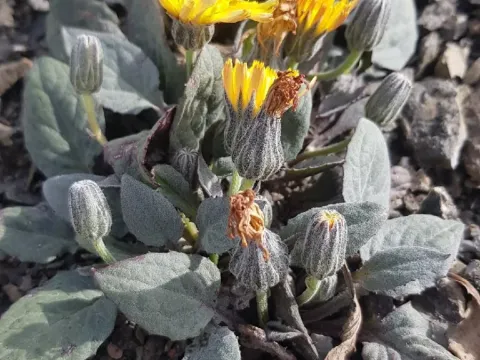
Pygmy hawksbeard
Crepis pygmaea
Pygmy hawksbeard (Crepis pygmaea) is a perennial herbaceous plant belonging to the Asteraceae family. Its natural origin is associated with the mountainous terrains of the Alps and Pyrenees, where it thrives in high-altitude environments.
What the section contains
Pygmy hawksbeard
This species is highly adapted to extreme climatic conditions, including low temperatures, strong winds, and limited nutrient availability. It acts as a pioneer species in rocky environments, contributing to the formation of thin soil layers.
Botanically, it features a rosette of leaves close to the ground and a robust root system adapted to stabilize in loose scree. The inflorescences consist of small, bright yellow flower heads that bloom during the short summer period typical of alpine regions.
Agricultural requirements for this plant include excellent drainage and alkaline, stony soils. It is critical to provide a substrate that mimics its natural habitat to prevent waterlogging, as the root system is highly sensitive to hypoxia.
In terms of economic use, the crop is currently utilized for soil stabilization and landscape restoration in mountainous areas. Its ability to colonize degraded rocky slopes makes it an interesting candidate for bioengineering and environmental conservation projects.
The main threats to Crepis pygmaea are fungal diseases associated with poor drainage and high humidity. Root rot and damping-off are common issues when the plant is exposed to environments outside of its natural alpine preference.
Powdery mildew can occur in areas with stagnant air circulation, particularly in greenhouse or experimental plot conditions. Effective ventilation is essential to maintain plant health and prevent the spread of fungal spores.
Pests such as aphids may occasionally infest young shoots, potentially reducing the plant's vigor. While rarely fatal, infestations should be monitored to prevent stunted growth during the critical flowering period.
Soil-borne insects can pose a threat by damaging the roots in drought-stressed plants. Maintaining a balanced environment with appropriate mineralization and proper pH levels helps the plant resist such attacks.
Integrated pest management strategies focusing on cultural practices, such as selecting appropriate micro-habitats and controlling moisture, are the most effective ways to manage threats to this specialized crop.