
Pyrrhopappus
Pyrrhopappus
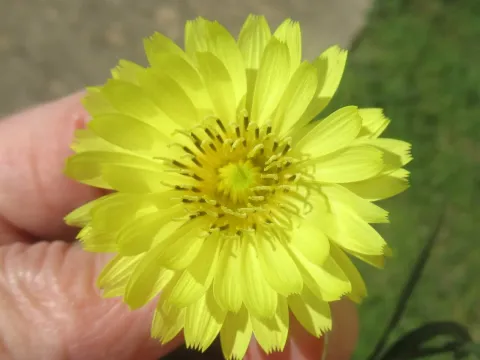
Pyrrhopappus, commonly known as the desert dandelion, belongs to the Asteraceae family. Native to the southern United States and Mexico, it is a hardy plant well-adapted to prairie and open grassland environments.
What the section contains

Pyrrhopappus
The plant features a deep taproot, which is an evolutionary adaptation to arid conditions. It produces bright yellow flower heads that bloom over an extended period, contributing to the biodiversity of the local ecosystem.
Sowing should take place in early spring, once the danger of frost has passed and soil temperatures have risen. Given the small size of the seeds, they require surface planting at a depth of roughly 1-2 centimeters.
Proper seedbed preparation is essential to ensure uniform emergence. Removing weeds and large debris helps the seeds establish a strong contact with the soil, facilitating germination.
Row spacing should be maintained at 30-45 centimeters to allow for adequate airflow and to prevent the spread of diseases. This spacing also makes manual or mechanical weeding significantly easier during the early growth stages.
Pyrrhopappus thrives in well-drained, sandy, or rocky soils. While it can tolerate nutrient-poor conditions, it performs best in soils with a neutral pH, where drainage is optimal to prevent root rot.
Sunlight is a fundamental requirement for this species. It is highly photophilous and should be planted in areas with full sun exposure throughout the day to ensure vigorous growth and optimal flowering.
Climate-wise, the plant prefers warm to hot temperatures. It exhibits remarkable heat tolerance, making it an excellent candidate for regions where other crops might suffer from heat stress during the summer months.
Watering management is crucial during the establishment phase. Once the taproot has developed, the plant becomes remarkably drought-tolerant, requiring minimal irrigation except during extreme and prolonged dry spells.
Fertilization requirements are low. If cultivation is performed for biomass or ornamental purposes, a light application of balanced fertilizer during the early vegetative stage is usually sufficient to support health.
Fungal diseases such as powdery mildew or root rot are the primary threats, particularly in areas with poor air circulation or high humidity. Maintaining proper spacing and drainage is the best preventative strategy.
Insect pests, including aphids and leaf-eating beetles, may attack the plant during its peak growth period. Regular monitoring of the foliage and flower heads is recommended for early detection of potential outbreaks.
Weed competition can be detrimental during the first few weeks of life. Effective weed management techniques, such as mulch application between rows, can help protect the crop until it reaches maturity.
Rodent damage to the taproot can occur, especially in late autumn when food sources are scarce. Protective measures or active pest monitoring may be necessary in areas with high rodent populations.
To ensure long-term sustainability, avoid planting Pyrrhopappus in fields previously affected by severe root-borne pathogens. Adhering to a crop rotation schedule can help mitigate the risk of disease buildup in the soil.