
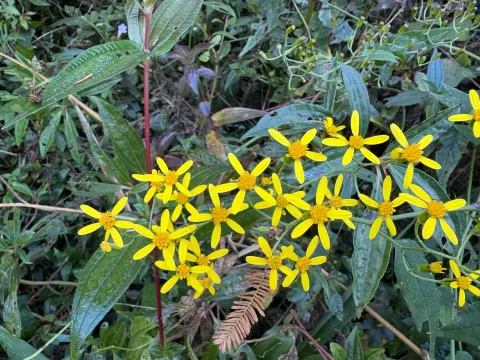
Climbing groundsel
Senecio scandens
Climbing groundsel (Senecio scandens) is a perennial evergreen climbing plant belonging to the Asteraceae family. It is native to the mountainous regions of Asia, including China and the Himalayas, where it thrives in diverse ecological niches.
What the section contains
Climbing groundsel
Propagation is commonly achieved through seeds sown in early spring. The seeds are small and should be sown on the surface of a moist, well-drained substrate, requiring light for germination.
Vegetative propagation via cuttings is also highly effective. Cuttings of approximately 10–15 cm in length can be placed in water or a moist sandy soil mix, where they typically develop roots within a few weeks.
For seed germination, maintaining an ambient temperature of about +20...+22 degrees Celsius is crucial. The seedlings are delicate and require careful handling during the initial weeks of development.
Once the seedlings establish a robust root system, they are transplanted into larger containers or permanent locations. Providing appropriate supports early on is essential to encourage the natural climbing habit of the plant.
This species prefers bright, filtered sunlight. While it can tolerate partial shade, excessive shade may result in leggy growth and reduced flowering, affecting the overall vigor of the plant.
The ideal soil is fertile, loose, and slightly acidic to neutral in pH. Good drainage is vital, as the plant is susceptible to root rot if left in waterlogged conditions for extended periods.
Watering should be consistent, ensuring the soil remains moist but not saturated. During the active growing season, regular irrigation is necessary, while winter watering should be reduced to prevent fungal issues.
As a frost-tender plant, Senecio scandens is best suited for zones where temperatures do not drop below +10 degrees Celsius. In cooler climates, it must be kept as a container plant and moved indoors for the winter.
Balanced liquid fertilizers are recommended during the active growth phase to support both leaf development and the production of its characteristic yellow flowers.
Senecio scandens has significant value in traditional Eastern medicine, where its aerial parts are harvested for their anti-inflammatory and antimicrobial properties. It is often used in herbal decoctions.
Commercial harvesting is carried out when the plants reach peak flowering, as this period corresponds to the highest concentration of bioactive alkaloids. Efficient harvesting requires systematic pruning of the stems.
The plant is increasingly popular in landscape architecture for vertical gardening. Its rapid growth rate allows it to quickly cover trellises, fences, and balconies with dense, vibrant foliage.
Yields of biomass can be optimized through regular pruning, which promotes denser branching and more frequent flower production. Well-maintained plants can provide multiple harvests throughout the growing season.
Beyond its medicinal and ornamental uses, the plant also serves as an excellent nectar source for various pollinators when grown in suitable outdoor environments, enhancing local biodiversity.
The primary pests affecting climbing groundsel are aphids and spider mites, which tend to congregate on the undersides of leaves and at the growing tips. These pests can significantly stunt plant growth if not managed.
Management involves regular monitoring and the application of neem oil or other appropriate insecticidal soaps. Maintaining higher humidity levels can also help deter spider mite infestations in indoor settings.
Fungal diseases like powdery mildew are common in environments with poor air circulation. Ensuring adequate space between plants and proper light penetration is key to disease prevention.
Root rot, often caused by overwatering or poor soil aeration, is a serious threat. If the soil remains too wet, the roots will quickly deteriorate, leading to wilting and eventual death of the plant.
- Use well-draining potting mixes to prevent soil compaction.
- Isolate new plants to monitor for potential pest introductions.
- Ensure good ventilation to maintain overall plant health.
The harvest should be performed using sterile scissors to prevent the spread of diseases. It is recommended to cut only the healthy, leafy stems, leaving enough foliage for the plant to recover and continue growing.
Harvesting is best done in the early morning once dew has evaporated but before the heat of the day reaches its peak, which helps preserve the chemical integrity of the harvested material.
After collection, the material should be cleaned of any debris or wilted leaves immediately. Maintaining high sanitation standards during this stage is essential for pharmaceutical-grade production.
Drying is performed in a shaded, well-ventilated area to prevent degradation of light-sensitive compounds. Keeping the temperature below +40 degrees Celsius ensures the quality of the dried herb remains intact.
Once fully dried, the product should be stored in opaque, airtight containers away from direct sunlight and humidity, ensuring shelf-life longevity for medicinal or decorative applications.