
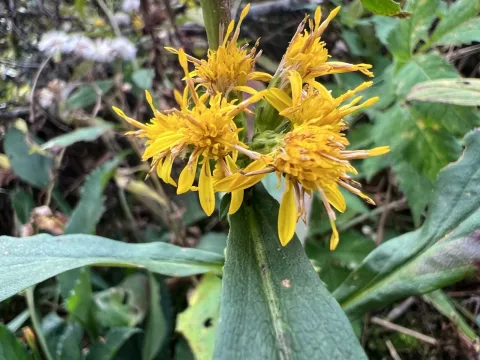
Clustered goldenrod
Solidago glomerata
Seeds of Solidago glomerata (clustered goldenrod) are typically sown in early spring, once the soil has warmed up. Fall sowing is also an effective practice, allowing the seeds to undergo natural winter stratification.
What the section contains
Clustered goldenrod
When starting indoors, seeds require a cold treatment at temperatures between 2°C and 5°C for about 6 weeks to break dormancy. This process significantly improves germination rates and seedling uniformity.
Seedlings should be transplanted when they develop their first set of true leaves. Ensure the spacing between individual plants is approximately 40–50 cm to promote healthy air circulation and reduce foliage humidity.
For vegetative propagation, mature clumps can be divided every three to four years. This is best achieved in early spring or late autumn when the plant is not in its peak growth phase.
Proper seedbed preparation involves creating a loose, well-draining medium. Seeds should be sown at a shallow depth, barely covering them with fine soil to ensure adequate light exposure for germination.
Solidago glomerata is a perennial plant belonging to the Asteraceae family. It is naturally adapted to alpine meadows and rocky slopes, which dictates its preference for well-drained, airy soil conditions.
The plant thrives in full sun exposure. While it exhibits some tolerance to partial shade, the best floral display and structural integrity of the stems are achieved when the plant receives at least six hours of direct sunlight daily.
Soil requirements include moderate fertility and a neutral to slightly acidic pH. Excessive soil moisture during winter months can be detrimental to the roots, so ensure the site does not have drainage issues.
Clustered goldenrod is exceptionally hardy and capable of surviving cold winter temperatures without special mulch. Its resilience makes it an excellent choice for low-maintenance perennial landscaping.
Regular maintenance involves light cultivation around the root zone and the removal of spent flower heads to prevent self-seeding and to encourage the plant to direct energy into root development for the following season.
The primary threats to Solidago glomerata include fungal diseases like powdery mildew and various leaf rusts. These are more common in environments with stagnant air and consistently high humidity levels.
Insect pests such as aphids and spider mites can occasionally affect the plant. Aphids tend to colonize the succulent new growth, while spider mites are more prevalent during periods of hot, dry weather.
Integrated pest management is the most effective approach. This includes monitoring for early signs of infestation and using horticultural soaps or targeted systemic insecticides only when pest thresholds are exceeded.
Proper cultural practices are essential for disease prevention. This includes thinning plants to improve airflow and avoiding overhead irrigation, which keeps the leaf surfaces wet for prolonged periods.
If chemical interventions are necessary, rotate products with different modes of action to prevent the development of resistance in pathogens and pests, ensuring long-term crop protection efficacy.