
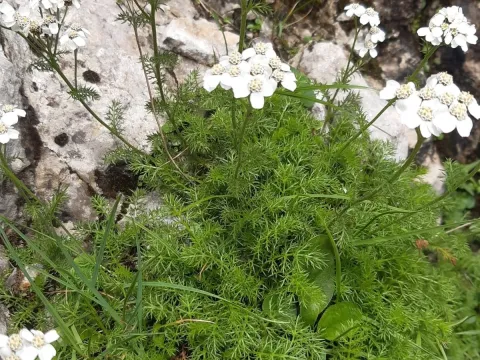
Clusius yarrow
Achillea clusiana
Clusius yarrow (Achillea clusiana) is a perennial herbaceous plant belonging to the Asteraceae family. Native to the Eastern Alps, this species is naturally adapted to high-altitude environments, thriving on limestone outcrops and rocky slopes where other vegetation struggles to survive.
What the section contains
Clusius yarrow
The plant features a basal rosette of finely divided, dark green foliage and short, stiff stems topped with dense corymbs of pure white flowers. Its diminutive stature makes it a classic choice for specialized alpine collections and miniature garden designs.
To successfully cultivate this species, it is critical to provide a well-drained, gritty substrate with a neutral to alkaline pH. The plant is drought-tolerant once established but requires excellent drainage to prevent crown rot during periods of excessive rainfall or winter thaws.
As a true alpine plant, it demands full sun to perform at its best. In garden settings, it should be situated in positions where it receives constant sunlight and plenty of air circulation, reflecting the mountain conditions of its natural habitat.
The primary use of Clusius yarrow is ornamental, specifically within rock gardens, scree beds, and stone troughs. Its ability to thrive in poor, rocky soil without supplemental irrigation makes it a low-maintenance addition for sustainable landscape design projects.
The most significant threat to Clusius yarrow is root and crown rot, primarily induced by overly rich soils or poor drainage. Ensuring the crown of the plant stays dry, often by using a top-dressing of grit or stone chips, is a fundamental protective measure.
Aphids can occasionally cluster on the flower buds during the peak growing season. While they rarely kill the plant, their feeding can deform the floral display, requiring gentle intervention with insecticidal soaps or manual removal.
Powdery mildew may occur if the plant is grown in cramped conditions with stagnant air. Adequate spacing and ensuring the foliage dries out quickly after rain are the most effective cultural controls for this fungal issue.
Slugs and snails can target new growth in the spring, which can set back the plant's development significantly. Protective barriers or regular monitoring during damp weather are recommended to maintain the integrity of the foliage.
Over-fertilization represents a hidden danger to this plant. Excessive nutrients lead to weak, succulent growth that is far more attractive to pests and less hardy against cold, which directly contradicts the plant's natural adaptation to nutrient-poor mountain soils.